
Renter friendly kitchen storage no drilling is about putting weight in the right places. Heavy things should sit on the floor, inside cabinets, or on sturdy shelves. Light things can use removable hooks, magnets, or tension. Once that rule is clear, a rental kitchen can gain real storage without holes in the wall.
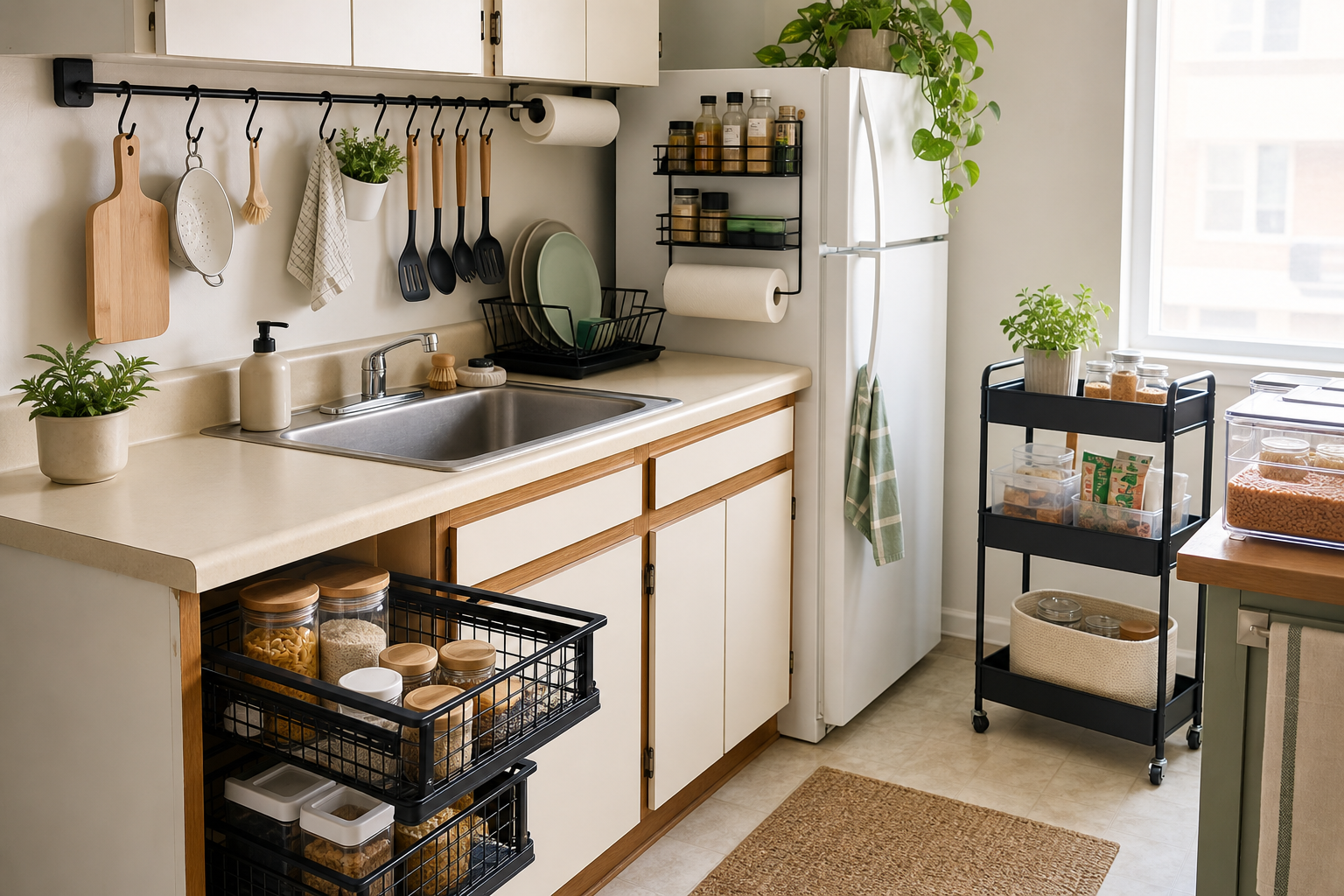
Table of Contents
Renter Friendly Kitchen Storage no Drilling: Quick Setup Rules
For renter friendly kitchen storage no drilling, start with one working zone before buying a full set of organizers. Put daily items in the easiest reach, move backups one step away, and leave enough empty space to return items quickly. This keeps the setup useful after the first week, which is the real test of any small-space storage idea.
The practical test for renter friendly kitchen storage no drilling is simple: the room should be easier to use on a rushed weekday, not just prettier for a photo. Keep the system visible, light, and easy to reset.
Start With Weight, Not Aesthetic
The first question is not which organizer looks best. It is what the organizer has to hold. Pots, glass jars, appliances, and full bottles need floor-supported or cabinet-supported storage. Measuring spoons, towels, silicone lids, and light packets can live on hooks or magnetic strips.
This weight rule protects the apartment and the storage system. Renter friendly kitchen storage no drilling should feel secure during normal cooking, not just during installation.
Use A Rolling Cart As Movable Counter Support
A narrow rolling cart can hold oils, onions, snacks, breakfast items, or coffee supplies. It can also become a temporary landing zone while cooking. Choose a cart that fits outside the main work triangle so it does not block the fridge, sink, or stove.
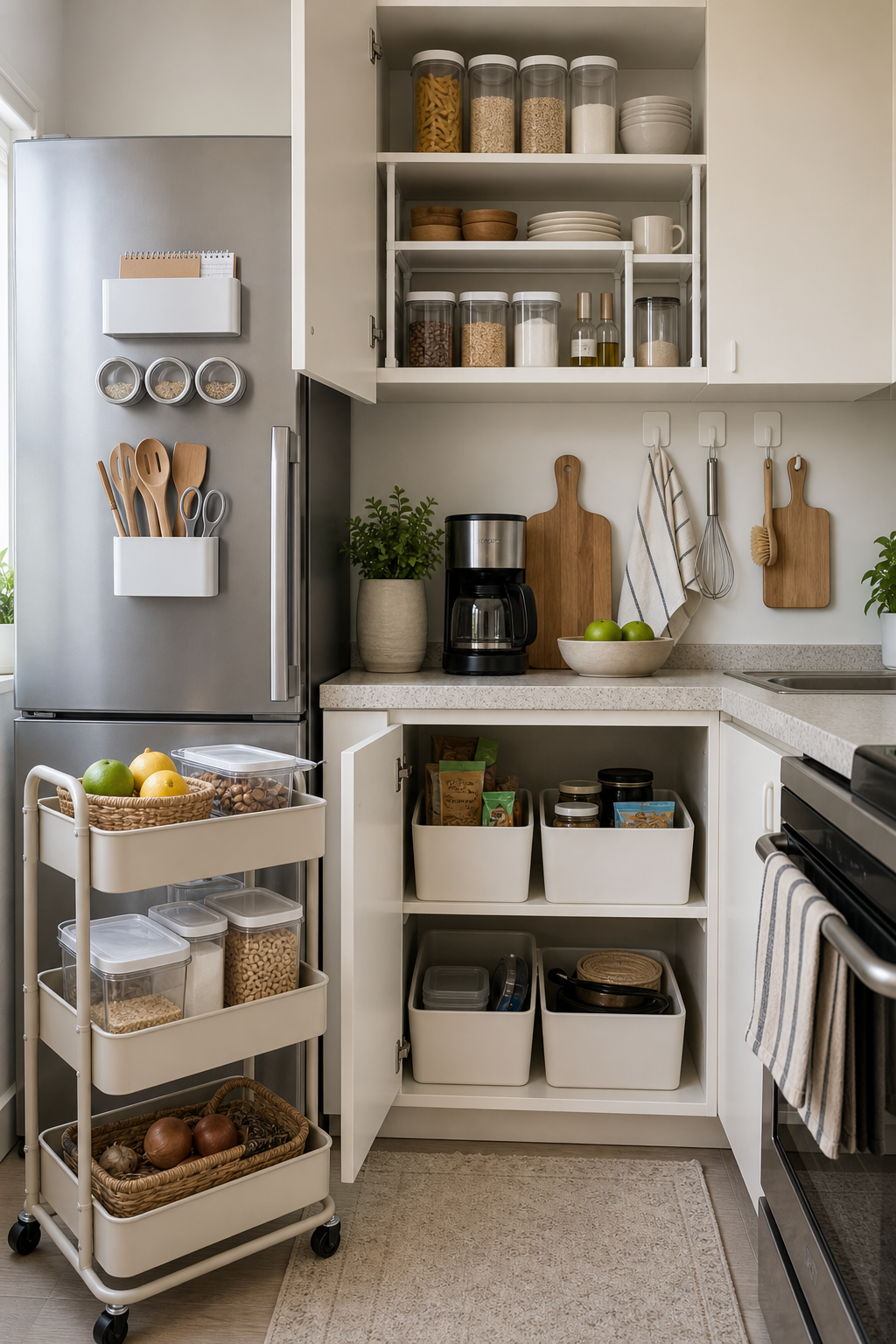
Put heavy items on the bottom tier and light daily items on top. If the cart has wheels that lock, use them. A cart that rolls away while you reach for oil is not helping.
Add Cabinet Shelf Risers First
Shelf risers are one of the safest no-drill upgrades because they sit inside existing cabinets. Use them for plates, mugs, short pantry jars, or food containers. Measure cabinet height before buying; a riser that is too tall wastes space above it.
Risers are especially useful in rentals because they move with you. They also avoid the risk of adhesives failing in steam or heat.
Try A Tension Rod For Light Vertical Storage
A tension rod under the sink or inside a cabinet can hold spray bottles, small rolls, or S-hooks for light tools. Do not overload it. The rod should feel snug before anything is added, and the cabinet surface should not bend.
Tension storage is best for items that are awkward but light. It is not a substitute for a pot rack.
Use Magnetic Storage Where It Makes Sense
If the side of the fridge is exposed, a magnetic rack can hold paper towels, wraps, spices, or lightweight bottles. Keep it narrow so the kitchen does not look crowded. Check that magnets are strong enough before loading glass containers.
Magnetic storage is renter-friendly because it leaves no adhesive behind. It also works best when the items are genuinely used near the fridge or prep zone.
Keep Adhesive Hooks For Light Repetition
Adhesive hooks can be useful for towels, measuring spoons, oven mitts, or small tools. They are less reliable for heavy pans or cutting boards. Follow the manufacturer’s surface and wait-time directions, especially in kitchens where heat and steam can weaken adhesive.
If removing the hook would make you nervous, the item is probably too heavy for that spot.
Use Cabinet Bins Instead Of Permanent Pull-Outs
No-screw cabinet bins can mimic pull-out drawers. Use them for snacks, lids, baking supplies, dish towels, or cleaning refills. Choose bins with handles so you can pull the whole category forward.
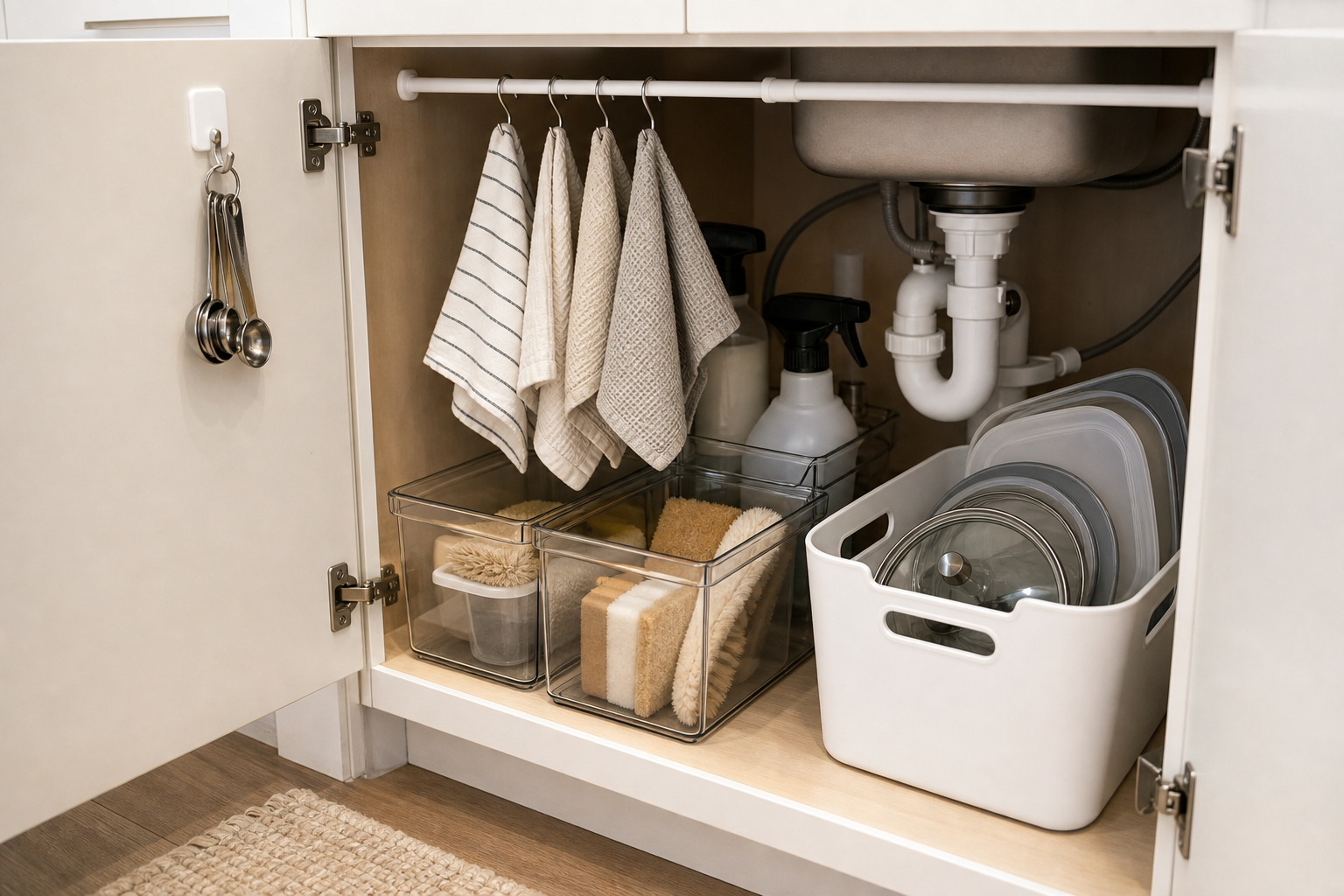
A bin is often better than a permanent insert in a rental. It is cheaper, removable, and easier to adjust when your cooking habits change.
Protect The Lease With A Removal Kit
Keep the packaging and removal directions for adhesive products in one small bag. Add painter’s tape, a plastic scraper, and a note about where each adhesive item was installed. Before moving out, remove slowly and follow the product directions.
The best renter-friendly system is one that works now and leaves cleanly later.
Quick Buying Checklist
Before buying anything for renter friendly kitchen storage no drilling, sketch the actual path through the room. Mark the door swing, the drawer or cabinet clearance you do have, the spot where you stand most often, and the nearest outlet or water source if it matters. This quick map keeps you from buying a storage piece that technically fits but blocks the movement that happens every day.
- Measure the exact width, depth, and height before buying anything for renter friendly kitchen storage no drilling.
- Choose freestanding or cabinet-supported storage for heavy items.
- Use removable hooks, magnets, or tension pieces only for lightweight jobs.
- Keep one empty margin so daily reset does not feel like a puzzle.
- Save packaging and removal directions for renter-friendly products.
Three Layout Recipes To Try First
The daily-use recipe: Put the five to ten items you touch every day in the easiest zone, then move everything else one step farther away. This recipe is best when the space feels cluttered even after you tidy it. It makes renter friendly kitchen storage no drilling feel calmer because the most visible area has fewer decisions.
The overflow recipe: Keep the main space light and create one labeled overflow bin outside the prime zone. Use this when backups, seasonal items, or duplicates are the real problem. The overflow bin should be easy enough to reach when you need a refill but inconvenient enough that it does not become daily clutter.
The renter-safe recipe: Put weight on the floor, inside cabinets, or on freestanding furniture, then use removable products only for light repeat-use items. This is the safest version of renter friendly kitchen storage no drilling when you cannot drill, patch, repaint, or risk a failed adhesive strip.
What Not To Buy Yet
Skip any organizer that requires a perfect version of your habits. If it needs every item folded the same way, lined up by height, or returned with two hands, it may not survive a normal week. Also skip oversized sets before measuring. A matching set of bins can waste space if the shelf, cabinet, closet, or entryway has awkward dimensions.
Be careful with products that promise instant extra space but hide the problem. Deep baskets, tall stacks, and closed boxes can make renter friendly kitchen storage no drilling look better for one day while making daily retrieval harder. If you cannot see the category or pull it out easily, it is probably storage for overflow, not storage for daily use.
How To Keep The System Working
Give the setup a seven-day test before calling it finished. During that week, notice what lands on the floor, what gets left on the counter, what never makes it back into a bin, and what you still cannot find. Those friction points are more useful than a shopping list. Adjust the system around the behavior that actually happens.
Once the layout works, schedule a short reset at the same time every week. Bring duplicates forward, remove trash or empty packaging, return items to their zones, and decide whether any category has outgrown its container. The best version of renter friendly kitchen storage no drilling is not a one-time makeover. It is a small system that is easy to restore before clutter spreads.
If the reset still feels hard, reduce the visible inventory before adding another organizer.
It also helps to take one quick phone photo after the reset. The photo is not for perfection; it gives you a reference point for what the working version of the space looks like. When the area drifts, you can compare it to the photo and fix the category that broke first.
Helpful Sources And Related Guides
Safety and home-health decisions need a practical check: keep heavy furniture stable, avoid moisture traps, and do not overload removable products.
FAQ
How can renters add kitchen storage without drilling?
Use rolling carts, cabinet shelf risers, magnetic racks, tension rods, cabinet bins, and light adhesive hooks. Keep heavy items on floor- or cabinet-supported storage.
Can adhesive hooks hold kitchen tools?
They can hold light tools if installed on an approved clean surface. Avoid heavy pans, glass, cutting boards, or anything that could fall and cause damage.
What is the safest no-drill kitchen storage?
Freestanding carts, shelf risers, bins, and magnetic racks are usually safer than adhesive shelves because they do not rely on wall adhesion.
Final Takeaway
Renter friendly kitchen storage no drilling works when the system is honest about space, weight, and daily habits. Start with the items you touch most, give each category one clear home, and keep backup storage from taking over the easiest spots.