
If your lease says no holes, a small bathroom can feel stuck exactly as it is: one sink, one towel bar, no linen closet, and a counter that fills up after two rushed mornings. The good news is that renter friendly bathroom storage no drilling does not have to mean flimsy organizers or a pile of baskets on the floor. The trick is to give every item a home without asking the wall to do heavy work.
This guide focuses on bathroom storage that can work in real rental situations: pedestal sinks, shared bathrooms, shower-tub combos, awkward toilet corners, smooth tile, hollow doors, and landlords who do not want permanent changes. Use it as a room map, not a shopping list. Start with the zones you actually need, then add only the storage that solves a specific problem.
Table of Contents
Quick Answer: The Best Renter Friendly Bathroom Storage No Drilling Zones
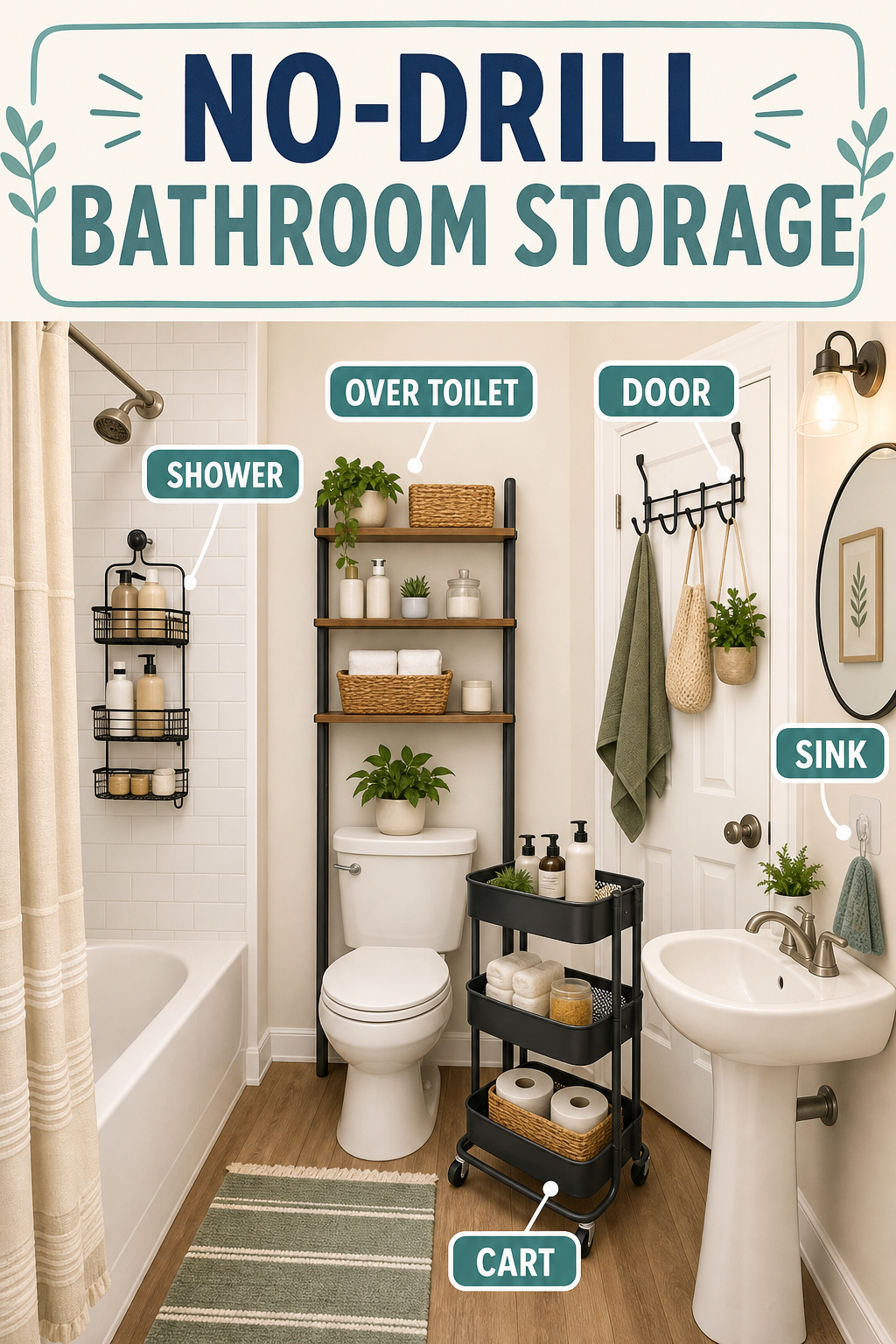
Most rental bathrooms work best when the strongest renter friendly bathroom storage no drilling plan uses five zones:
- Shower zone: a hanging shower caddy, suction baskets, or adhesive baskets rated for wet surfaces.
- Sink zone: a small tray, counter riser, or narrow cart for daily-use products.
- Over-toilet zone: a freestanding shelf, ladder shelf, or slim cabinet that does not attach to the wall.
- Door zone: over-door hooks or an over-door rack for towels, robes, or a light toiletry bag.
- Backup zone: a labeled bin outside the bathroom for extra toilet paper, bulk products, and anything humidity can damage.
That combination usually gives you more storage than a single wall shelf, and it is easier to remove when you move out. It also spreads weight across the floor, door, shower fixture, and smooth tile instead of relying on one adhesive product to hold everything.
Before You Buy Anything, Sort the Bathroom by Use
No-drill storage fails when it tries to hold too much. Before choosing organizers for a renter friendly bathroom storage no drilling setup, separate bathroom items into four groups:
- Daily use: toothbrush, face wash, deodorant, skincare, contacts, medicine you use every day, hairbrush, and the towel currently in use.
- Weekly use: hair tools, masks, nail supplies, shaving supplies, extra washcloths, and cleaning cloths.
- Backups: extra shampoo, refill soap, bulk toilet paper, spare toothpaste, extra razors, and unopened skincare.
- Occasional use: guest towels, travel toiletries, special hair tools, first-aid overflow, and products you keep “just in case.”
Only the daily group deserves the easiest storage. Weekly items can sit on a lower cart shelf or in a labeled bin. Backups often belong outside the bathroom, especially if the room gets steamy and has poor ventilation. The EPA’s mold guidance is clear that controlling moisture matters in bathrooms, so avoid turning a damp cabinet or shelf into a place where paper goods, cardboard boxes, and unused products sit for months.
What to Avoid in a Rental Bathroom
The phrase “no drill” can hide a lot of bad advice. A renter-safe bathroom setup should be removable, lightweight, and honest about moisture. Avoid these mistakes before you spend money:
- Heavy adhesive shelves over the toilet. Adhesive can work for light hooks and small baskets, but heavy bottles above a toilet are a bad bet.
- Stick-on products over textured paint. Many adhesives need smooth, clean surfaces. Textured walls, peeling paint, grout lines, and damp surfaces are risky.
- Storage that blocks the toilet tank lid. You still need access if the toilet runs or needs a repair.
- Deep bins on narrow shelves. They look tidy at first but become hard to use if you cannot see what is in the back.
- Anything that traps water against tile or grout. Shower baskets, suction hooks, and caddies need air flow and regular cleaning.
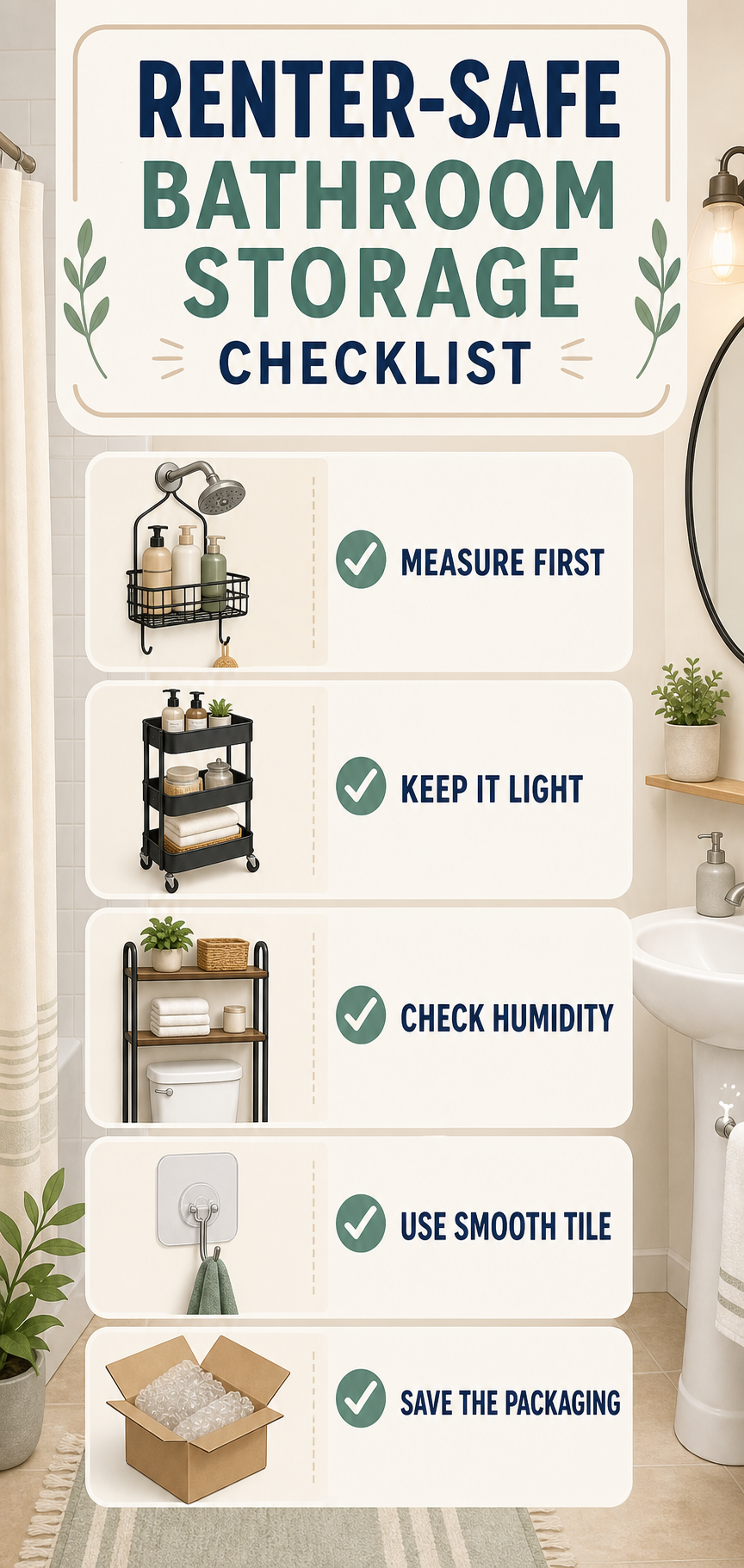
If a product says it is removable, still keep the packaging and directions until move-out. Take a photo of the wall or tile before installing anything, clean the surface first, and do not overload the product beyond its listed limit.
Zone 1: Use the Shower Without Crowding It
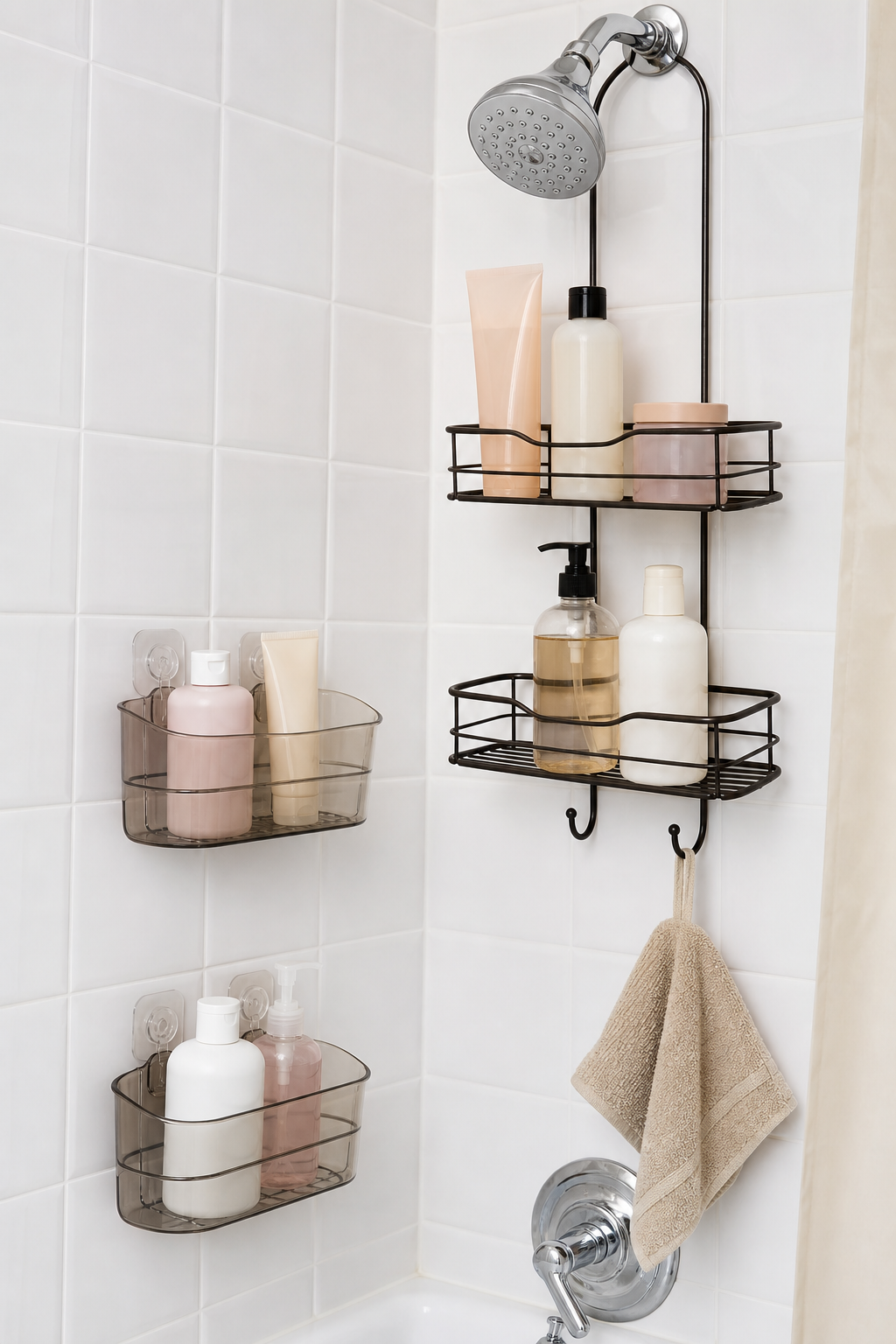
The shower is usually the easiest place to gain storage without tools, but it is also the easiest place to overdo it. For renter friendly bathroom storage no drilling, start with a bottle limit. One shampoo, one conditioner, one body wash, one face wash, and one shaving item is usually enough for the active shower zone. Everything else can sit in a backup bin outside the wet area.
A hanging shower caddy is the simplest choice for a shower-tub combo. It uses the shower head or shower arm rather than the wall, so it is usually less risky than adhesive shelves. Choose one with drainage, raised rails, and enough spacing for pump bottles. If your shower head is loose or angled awkwardly, use a tension corner caddy or a suction basket instead.
Adhesive or suction baskets can work on smooth tile, but treat them as light-duty storage. They are better for a razor, face wash, small tube, or washcloth than a full set of family-size bottles. Clean the tile first, let it dry, and give the adhesive the full cure time listed by the manufacturer before loading it.
Zone 2: Keep the Sink Area for Daily Use Only
The sink area should not become a full storage unit. In a small rental bathroom, it works best as a daily landing zone: toothbrush, hand soap, one face product, and maybe a tray for morning basics. This is where renter friendly bathroom storage no drilling should stay small and easy to clean. If the counter is tiny, use a narrow tray instead of several separate containers. A tray makes the whole group easy to lift when you wipe the sink.
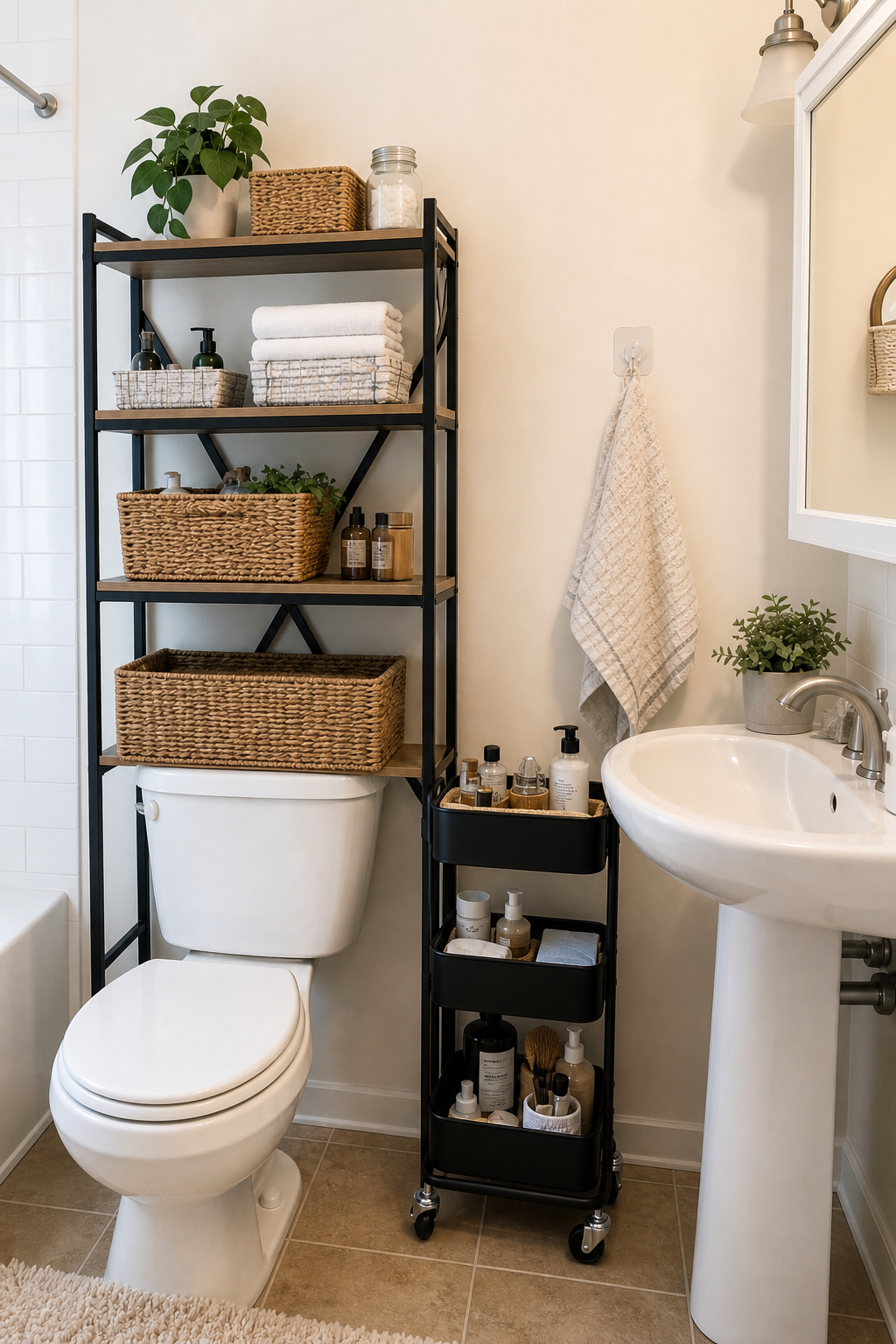
If you have a pedestal sink, do not fight it with a bulky skirted cabinet unless you truly need hidden storage. Many sink skirts look cluttered quickly and can trap dust. A narrow rolling cart beside the sink is easier to clean around and easier to move. Put daily items on the top shelf, weekly items in the middle, and backups on the bottom only if the room stays dry.
A small vanity with no drawers works better with shallow bins or a two-tier organizer inside the cabinet. Keep plumbing access clear. Do not pack the cabinet so tightly that you cannot see a leak or reach the shutoff valve.
Zone 3: Add Over-Toilet Storage That Stands on the Floor
The wall above the toilet is tempting, but renters should be careful with anything mounted there. A freestanding over-toilet shelf is usually the safer first choice. It gives you vertical storage without holes, and it can move with you later.
Use the top shelf for light, rarely handled items such as extra hand towels or a small basket. Use the middle shelves for folded towels, toilet paper, and daily refill items. Keep glass jars and heavy bottles lower, especially if the shelf is narrow. If the unit feels wobbly and your lease does not allow wall anchors, choose a shorter shelf or a rolling cart instead of forcing a tall unit into the space.
Zone 4: Use the Door for Towels and Light Items
A bathroom door is valuable because it is already vertical space. Use over-door hooks for towels, a robe, or a light toiletry bag. If the door still needs to close fully, check the gap above the door before buying a rack. Some older rental doors have tight clearance.
Do not hang everything on the door. Too many towels can keep fabric damp, make the door feel heavy, and create a messy view from the hallway. A good rule is one towel per person plus one robe or light bag. Guest towels can live on an over-toilet shelf or outside the bathroom.
Zone 5: Let a Rolling Cart Do the Flexible Work
A slim rolling cart is one of the most useful renter friendly bathroom storage no drilling options because it does not depend on the wall, tile, or door. It works beside a pedestal sink, next to the toilet, or just outside the bathroom if the room is too narrow.
Use a cart with rails on each shelf so bottles do not slide off. Put the items you reach for most on top, cleaning supplies or hair tools in the middle, and toilet paper or extra washcloths on the bottom. If children or pets use the bathroom, keep cleaning products out of reach and do not store them on an open low shelf.
How to Choose Adhesive Hooks and Baskets
Adhesive storage is useful, but it should be chosen carefully in a bathroom. Look for products made for bathroom use, not only general wall use. Smooth tile usually performs better than painted drywall. Avoid placing adhesive hooks directly in the path of heavy steam unless the product is designed for that location. This is the part of renter friendly bathroom storage no drilling where patience matters: clean, dry, press, wait, then load lightly.
Before installing, clean the surface with the method the manufacturer recommends, let it dry fully, and press the hook or basket firmly in place. Wait the full recommended time before loading it. If the product has a stated weight limit, treat that as the maximum under ideal conditions, not a challenge to test in a humid rental bathroom.
Adhesive hooks are best for hand towels, washcloths, small brushes, loofahs, and light hanging pouches. They are not the best choice for a full basket of bottles, a hair dryer, a heavy robe, or anything breakable.
A Simple No-Drill Bathroom Layout
If you are starting from scratch, try this renter friendly bathroom storage no drilling layout before buying more:
| Bathroom problem | No-drill solution | Best for |
|---|---|---|
| No shower shelf | Hanging shower caddy or suction basket | Daily shower bottles |
| No linen closet | Freestanding over-toilet shelf | Towels, toilet paper, light bins |
| Pedestal sink | Narrow rolling cart | Daily toiletries and weekly items |
| No towel bar | Over-door hooks or adhesive hook | One towel or robe per person |
| Too many backups | Labeled bin outside the bathroom | Bulk products and extras |
This setup is not fancy, but it solves the real issue: items stop floating around the sink, shower ledge, toilet tank, and floor.
Common Mistakes With No-Drill Bathroom Storage
- Buying organizers before measuring. Measure the width beside the sink, the toilet clearance, the door gap, and the height above the toilet tank.
- Using too many open baskets. Open baskets are easy, but five different baskets can make a small bathroom look busier.
- Keeping backups in the daily zone. Extra products take the space that should belong to the items you use every morning.
- Hiding plumbing access. Under-sink storage should never block shutoff valves or make leaks hard to notice.
- Ignoring cleaning friction. If an organizer makes it harder to wipe the sink or clean the shower, it will probably fail.
- Trusting adhesive on the wrong surface. Smooth tile is different from painted drywall, textured walls, grout lines, or damp surfaces, so every renter friendly bathroom storage no drilling plan should start with the surface, not the product photo.
FAQ
What is the best renter friendly bathroom storage no drilling option?
The best renter friendly bathroom storage no drilling option is usually freestanding or removable: hanging shower caddies, rolling carts, over-door hooks, freestanding over-toilet shelves, and light adhesive hooks on smooth tile. These solve storage problems without permanent holes.
Can I use adhesive shelves in a rental bathroom?
You can use adhesive shelves if the surface, humidity level, and product directions support it. Keep them light, avoid textured or peeling surfaces, and do not place heavy bottles or breakable items above the toilet or sink.
How do I add storage around a pedestal sink?
Use a narrow rolling cart, a small tray on the sink edge if there is room, or a nearby freestanding shelf. Avoid bulky sink skirts unless you need hidden storage and can keep the area clean and dry.
Where should extra toilet paper go in a small rental bathroom?
Keep one or two rolls within reach, then store the rest in a basket on an over-toilet shelf, on the bottom of a rolling cart, or outside the bathroom in a labeled backup bin.
How do I keep a no-drill bathroom setup from looking cluttered?
Limit each zone to one job. Keep only daily-use products near the sink and shower, move backups out of sight, and choose organizers in similar colors or materials so the room feels calmer.
The Bottom Line
A rental bathroom does not need holes in the wall to work better. Start with the shower, sink, over-toilet, door, and backup zones. Keep adhesive storage light, use freestanding pieces for heavier items, and move extras out of the room when humidity or space becomes a problem. The result is not a showroom bathroom. It is a bathroom that is easier to use tomorrow morning and easier to undo when your lease ends.
More renter-safe organization ideas are available in the Renter Friendly category, read how Her Neat Nest approaches product and storage advice in How We Review Products, or start from the home page.
Reference: the EPA’s bathroom moisture and mold guidance is a useful baseline when deciding what should stay in a damp bathroom and what should be stored elsewhere: A Brief Guide to Mold, Moisture and Your Home.