
Knitting looks compact until several projects become active at once. Yarn slips behind the chair, circular needles lose their size markers, a paper pattern collects tea rings, and the small scissors needed tonight are buried beneath supplies purchased for a future sweater.
Knitting clutter is usually project ambiguity rather than yarn volume. Separating active work, planned yarn, and true leftovers keeps needles paired with the right gauge and stops every attractive skein from claiming prime space. It turns small apartment knitting supplies storage ideas into a repeatable household routine rather than a photo-ready arrangement.
Useful small apartment knitting supplies storage ideas protect fibers while keeping the next row easy to begin. Yarn needs clean, dry, low-friction storage; needles need visible size control; notions need shallow containment; and every work in progress needs one complete movable home rather than a trail across the room.
Fiber, dye, construction, age, and condition matter. Follow yarn labels and maker guidance, and seek a textile conservator for valuable, antique, mold-affected, or pest-damaged material. Household organizers can improve handling, but they do not create museum conditions or reverse deterioration.
Start by measuring the current project at its widest point, the longest needle case, the largest yarn cake, and the cabinet opening. Storage should allow a container to leave without scraping adjacent fibers or requiring another project to be unpacked first.
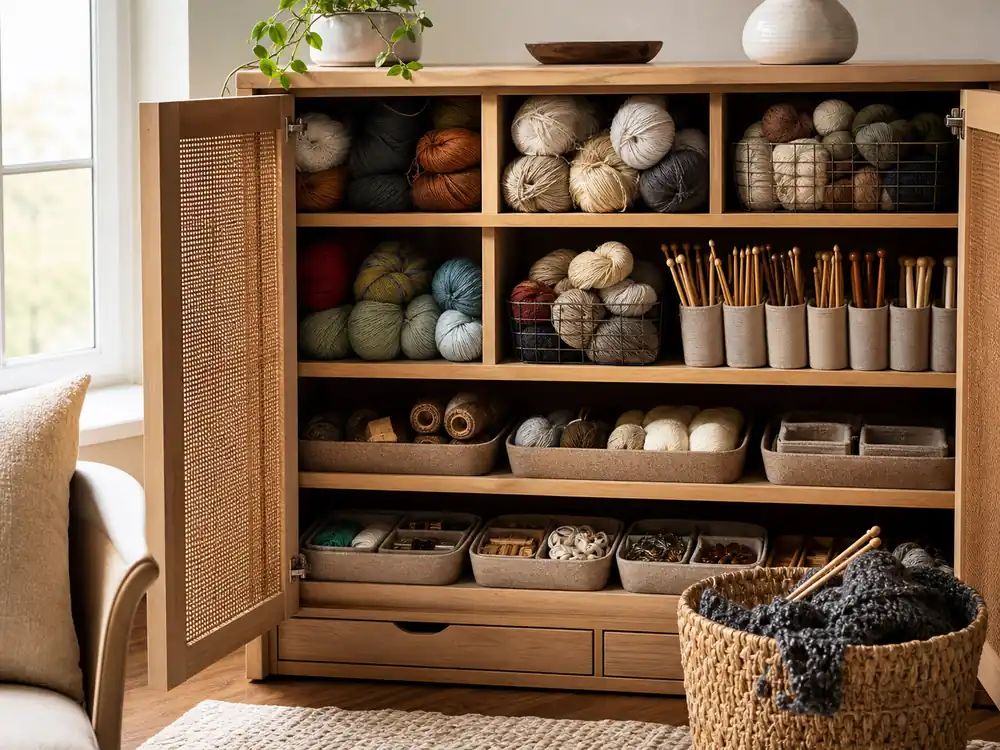
Small Apartment Knitting Supplies Storage Ideas Start With Project Status
Divide the collection into active projects, ready yarn, tools and notions, patterns, and long-term keepsakes. An active project includes every item required for the next session, while reserve yarn can occupy a slower shelf and inherited material can receive more protective assessment. This status system stops the entire stash from competing for one basket.
It also exposes abandoned pieces that need a deliberate decision: finish, unravel, donate when suitable, archive for sentimental reasons, or remove because damage makes continued storage unwise. Photograph each paused project with its yarn label, needle size, gauge notes, and current stage before moving it to slower storage. The record reduces unnecessary handling later and prevents a promising piece from becoming an unidentified bundle that must be reconstructed from memory.
Treat “Small Apartment Knitting Supplies Storage Ideas Start With Project Status” as successful only when another person can understand the boundary without a private explanation. The relationship to “Group Yarn By Fiber Before Color” should be visible through location, support, or a concise label. That clarity protects knitting supplies when routines change or the apartment is shared.
Group Yarn By Fiber Before Color
Color creates a beautiful shelf, but fiber type and care usually drive safer storage. Keep wool, cotton, linen, synthetics, specialty blends, and unknown yarn identifiable, retaining labels with dye lot, yardage, washing information, and project notes whenever possible.
Avoid compressing soft skeins beneath heavy tools or packing damp fibers into sealed containers. A musty odor, webbing, larvae, staining, or unexplained shedding deserves isolation and careful investigation before the yarn returns to the main cabinet.
Give Needles A Size-Controlled Home
Store straight needles in a supported roll, sleeve, or shallow divided tray, and keep circular needles in individual pockets that prevent sharp bends in the cable. Crochet hooks, cable needles, and double-pointed sets need separate visible positions rather than one crowded jar. Use a needle gauge to verify unmarked tools before storage, then record the size without attaching rough tape to delicate surfaces.
Keep points protected and inaccessible where children or pets could reach them, and discard or repair splintered tools before they snag yarn. A complete work basket makes small apartment knitting supplies storage ideas practical in rooms that serve several purposes.
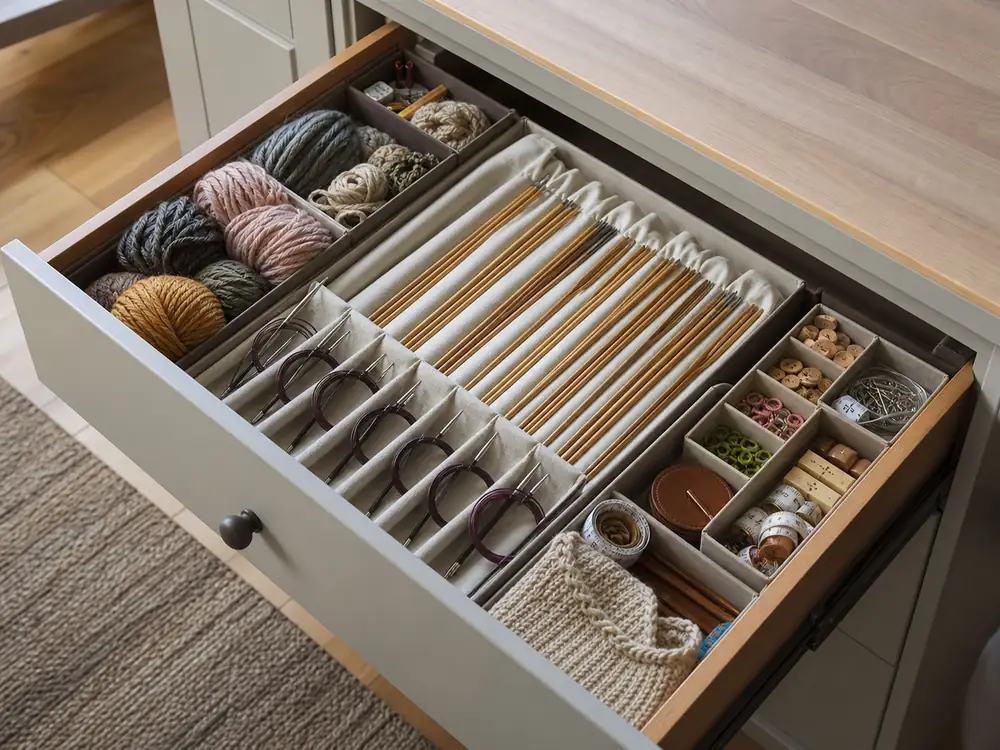
Use Shallow Trays For Notions
Stitch markers, tapestry needles, row counters, tape measures, cable keys, small scissors, and repair tools disappear in deep bins. A shallow lidded tray with adjustable compartments keeps each type visible and prevents metal pieces from migrating into soft yarn. Inspect closures before carrying the tray.
Magnets can affect some electronic items and may not suit every tool, while loose blades and pins need secure protection. The container should open fully on the normal knitting surface without sending pieces into sofa cushions.
Build One Complete Work-In-Progress Basket
Choose a basket or bag that holds the active yarn, protected needles, pattern, notions pouch, and the knitted piece without crushing it. Keep drinks, food, cosmetics, and unrelated chargers out so the project remains clean and the container stays light enough to move.
Before closing the project, secure live stitches, note the row or pattern position, and place small parts in their pouch. This two-minute pause preserves momentum and lets a shared chair, sofa, or dining table return to ordinary use without dismantling the work.
Protect Patterns And Private Notes
Printed patterns need a clean sleeve or slim folder away from damp yarn and sharp needles. Digital files need meaningful names, legal access, and dependable backups; a tablet should charge on a stable ventilated surface rather than inside a soft project bag.
Personal measurements and gift plans may deserve privacy. Keep only the reference needed for the current project in the portable basket and file the master notes separately, reducing both paper bulk and the chance that irreplaceable annotations travel outside the apartment.
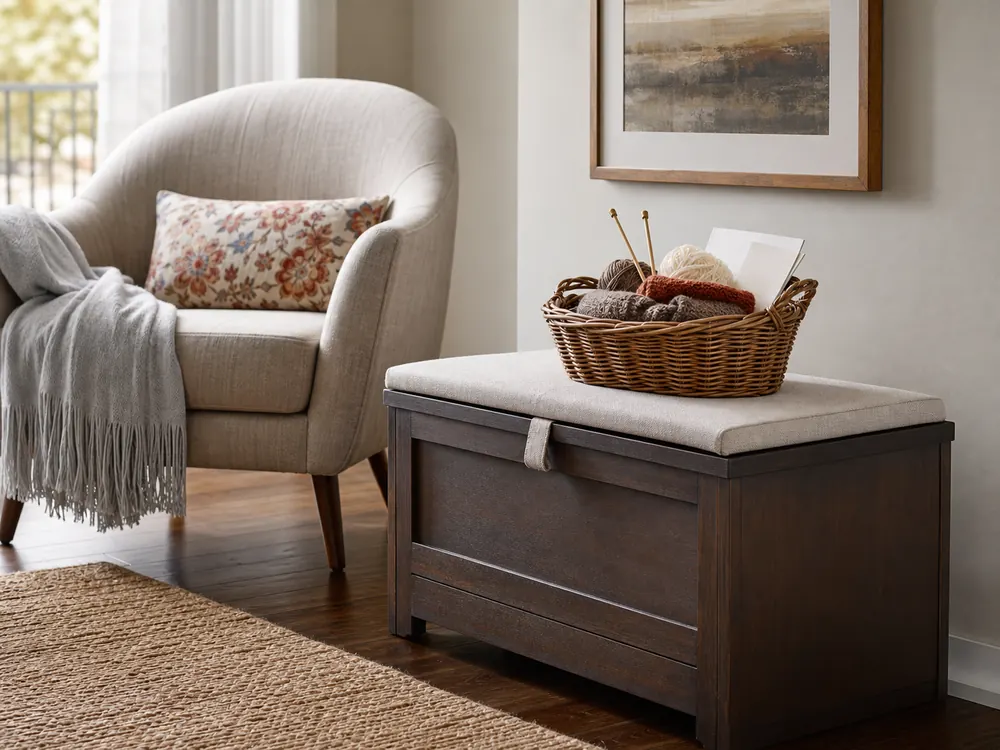
Choose A Clean Interior Cabinet
An interior cabinet away from direct sun, kitchen grease, bathroom humidity, floor leaks, and cold exterior-wall condensation is often better than an exposed decorative shelf. Leave airflow around containers and avoid pressing fibers against raw wood, rusty metal, or unknown adhesives. Clean the empty shelf before loading and inspect corners, hardware, and liners.
Fragrance does not prove cleanliness, and strong repellents or improvised treatments may affect fibers or people; respond to confirmed pests with material-appropriate professional guidance rather than masking evidence. Regular fiber checks keep small apartment knitting supplies storage ideas responsive to moisture, pests, and real use.
Create A Monthly Fiber Check
Once a month, lift each active container and look for moisture, dust, insects, webbing, loose dye, brittle labels, snagged yarn, and compacted skeins. Vacuum and clean the surrounding room appropriately so lint and food debris do not support a hidden pest problem.
Rotate the inspection schedule rather than repeatedly handling every keepsake. The goal is early evidence with minimal friction: clean hands, a clear surface, good light, and enough time to isolate a concern without pushing the suspect item into another basket.
Reset The Cabinet At Project Changes
When a project ends, return unused yarn to its identified group, clean suitable tools, replace missing labels, and move finished pattern notes into the reference file. Photographing the remaining yarn beside its label can make future matching easier without opening every container.
Do not let the completed-project basket become permanent mixed storage. Emptying it creates a ready landing place for the next idea and keeps small apartment knitting supplies storage ideas connected to real creative cycles rather than an ever-expanding collection of containers.
Before Buying Organizers For Knitting Supplies
Do not purchase a complete system for knitting supplies before trying one measured module. If it supports “Small Apartment Knitting Supplies Storage Ideas Start With Project Status” and leaves “Reset The Cabinet At Project Changes” simple, expand only as the real collection requires.
For small apartment knitting supplies storage ideas, compare the linked formats with the real shelf, then verify current product information directly on the listing.
- Breathable yarn storage bag
- Knitting needle organizer
- Shallow notions organizer
- Portable knitting project basket
Research Behind Small Apartment Knitting Supplies Storage Ideas
Sources for knitting cover its safety and material care. The related Her Neat Nest guides connect this knitting plan with nearby apartment zones.
- Smithsonian Museum Conservation Institute guidance on climate and textile storage
- Small Apartment Craft Storage Ideas
- Small Apartment Hobby Storage Ideas
- Small Apartment Hidden Storage Ideas
Knitting Supplies: Practical Questions
How should yarn be stored in a small apartment?
Keep clean dry yarn identifiable by fiber in breathable or material-appropriate protected storage, away from direct sun, damp walls, kitchen residue, pests, and crushing weight.
What is the best way to organize knitting needles?
Use supported sleeves or shallow compartments by type and verified size, protect points and cables, and keep damaged or splintered tools out of active storage.
How do you store a knitting project in progress?
Give each active project one movable basket containing its yarn, protected needles, notions, pattern, and a clear note showing the exact stopping point.
Use “Knitting Supplies Start With Project Status” to set up the knitting system; let “Reset The Cabinet At Project Changes” judge the return. Every knitting group should finish its task without borrowing a chair or a neighboring shelf. When the collection or route changes, revisit knitting supplies and correct the smallest failing boundary before adding another container.