
Camping equipment seems compact when every piece is compressed for travel. Back at home, a tent needs to dry, a sleep system should not remain crushed indefinitely unless its maker allows it, cookware carries residue, batteries need review, and a single missing pole section can undermine the next trip.
Camping gear should be stored by life-safety role and trip readiness, not by how neatly it fits. Sleep systems, cooking equipment, fuel, batteries, water treatment, and repair items require different inspections before departure. This is where useful small apartment camping supplies storage ideas differ from decorative bin styling.
Useful small apartment camping supplies storage ideas separate what must stay clean, what can return damp or dusty, what travels together, and what belongs in slower reserve storage. The goal is not maximum capacity. It is a compact route that makes camping equipment easier to inspect, pack, carry, unpack, and restore without taking over a shared room.
Combustion equipment and fuel require strict current maker, building, transport, storage, and fire-safety guidance. Never use fuel-burning camping equipment in enclosed spaces where prohibited or unsafe, and do not treat an apartment organizer as approval for fuel storage. Keep hazardous items, sharp tools, medicines, and batteries secured and seek qualified guidance when requirements are unclear.
Measure the relaxed storage size of tents and sleep systems, longest pole section, heaviest equipment case, shelf load, and grip clearance. Include the path from cabinet to door and any building restrictions, because high or overloaded storage creates lifting risk even when the gear technically fits.
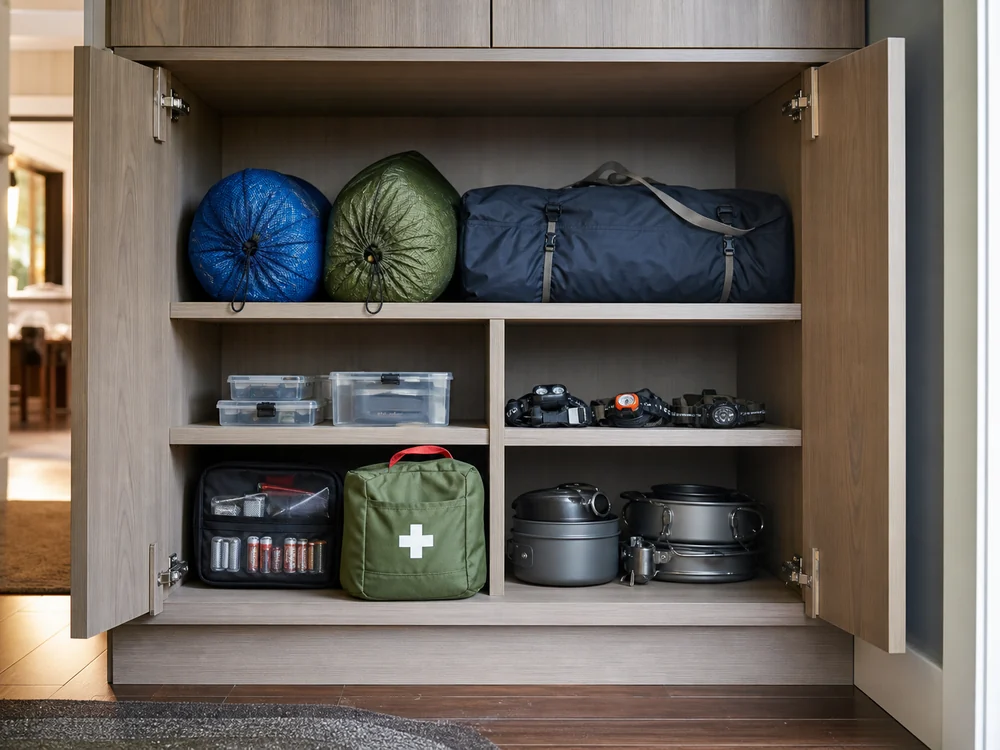
Small Apartment Camping Supplies Storage Ideas Start By Trip Function
Divide equipment into shelter, sleep, kitchen, water, lighting, navigation, first aid, repair, and personal comfort modules before choosing containers. Functional modules make missing essentials visible and let a short overnight trip leave without unloading equipment intended only for longer or colder conditions. Keep a dated inventory in each module and reconcile borrowed, consumed, damaged, or wet items immediately after every return.
Dry Shelter Fabric Before Storage
Unpack tents, footprints, tarps, and rain gear after a trip, remove debris appropriately, and dry each piece completely according to maker guidance. Within dry shelter fabric before storage, this step keeps small apartment camping supplies storage ideas connected to a real apartment routine instead of a decorative container plan.
Moisture folded into coated fabric can create odor, staining, or deterioration, while hidden grit can abrade surfaces during compression and handling. Inspect seams, coatings, poles, clips, cords, stakes, and the storage sack in good light, recording any repair needed before the next trip.
Let Sleep Systems Recover
Store clean dry sleeping bags and insulated bedding in the relaxed method recommended by the manufacturer rather than assuming the travel compression sack is suitable long term. Within let sleep systems recover, this step keeps small apartment camping supplies storage ideas connected to a real apartment routine instead of a decorative container plan. Prime closet volume may be needed because insulation depends on condition and loft, and repeated crushing can conflict with product care directions.
Check for dampness, tears, zipper damage, odors, and care-label requirements, then keep heavy objects from pressing on the stored system. Functional modules keep small apartment camping supplies storage ideas lighter and more precise for different outings.
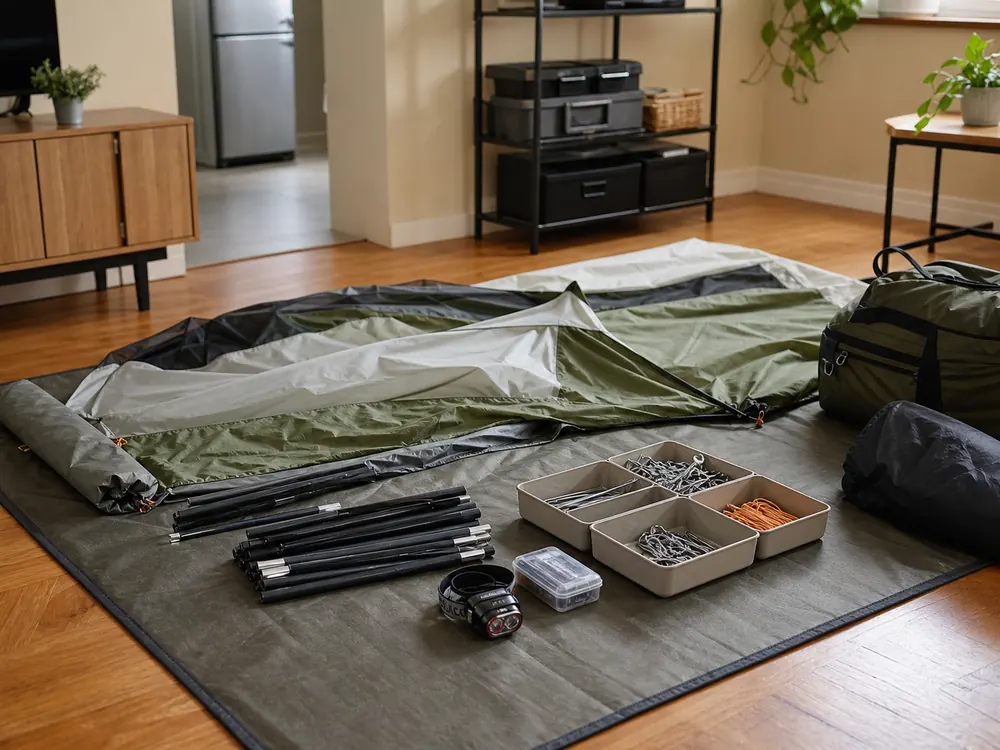
Build A Clean Camp-Kitchen Module
Clean and fully dry cookware, utensils, stoves, and food containers, keeping food residue and household pantry items out of the equipment cabinet. Within build a clean camp-kitchen module, this step keeps small apartment camping supplies storage ideas connected to a real apartment routine instead of a decorative container plan.
A defined kitchen module shortens packing but must preserve separation between clean food-contact items and fuel, chemicals, dirty cloths, or sharp repair tools. Inspect seals, handles, valves, ignition parts, and nesting pressure, following maker directions before testing or operating any appliance.
Keep Fuel And Combustion Boundaries Strict
Identify every stove, heater, lantern, and fuel-related item, then follow current product, lease, building, fire-code, and transport requirements for storage and use. Within keep fuel and combustion boundaries strict, this step keeps small apartment camping supplies storage ideas connected to a real apartment routine instead of a decorative container plan.
Convenient cabinet grouping must never override carbon-monoxide, fire, leak, ventilation, or prohibited-material concerns in a shared residential building. Verify labels and condition before each trip, keep incompatible or prohibited materials out of the apartment, and obtain qualified local guidance when uncertain.
Create A Battery And Lighting Check
Remove or manage batteries according to device and battery-maker guidance, group lights by function, and keep contacts protected from loose metal objects. Within create a battery and lighting check, this step keeps small apartment camping supplies storage ideas connected to a real apartment routine instead of a decorative container plan.
A headlamp that was tossed into a bin can be discharged, corroded, switched on accidentally, or separated from the charging cable needed at departure. Check for swelling, leakage, damage, charge state, cable condition, and local disposal options; isolate questionable batteries safely without delay.
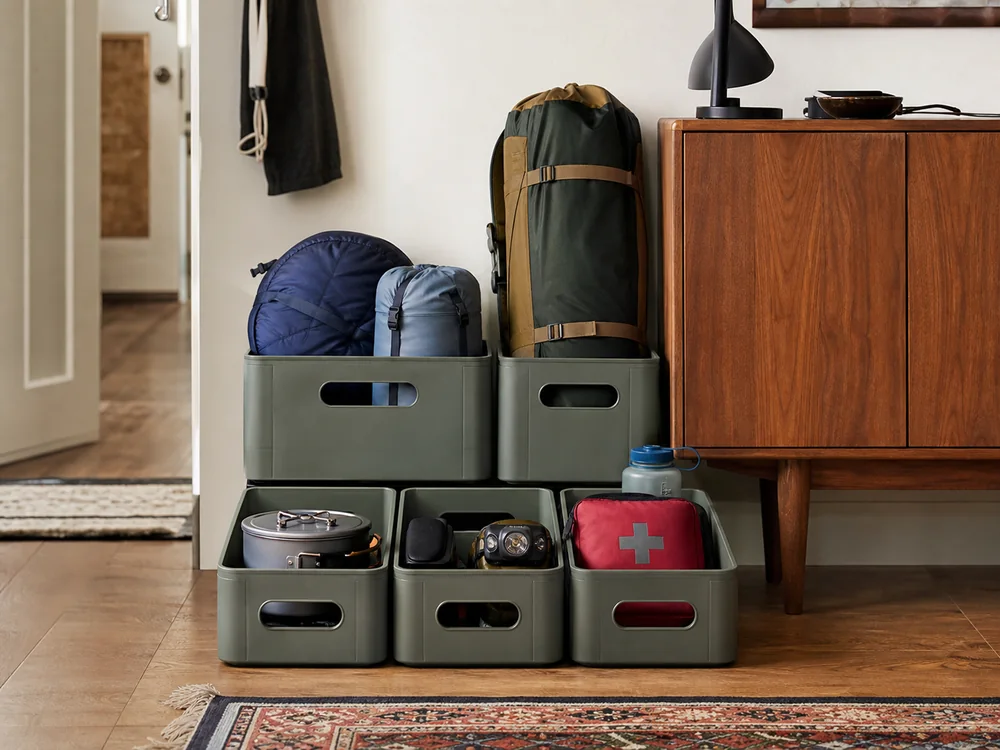
Use One Repair And Parts Case
Place patches, cord, spare buckles, pump adapters, small tools, and model-specific parts in divided labeled positions rather than loose pockets across several bags. Within use one repair and parts case, this step keeps small apartment camping supplies storage ideas connected to a real apartment routine instead of a decorative container plan. A visible repair case helps distinguish a complete field fix from an optimistic collection of parts that do not match current equipment.
Review adhesive dates and product compatibility, secure sharp tools, and replace consumed parts only after confirming the equipment still belongs in the active kit. A pre-trip check turns camping supplies into tested readiness rather than packed uncertainty.
Store Heavy Gear Low
Place dense cookware, tool cases, hard containers, and other heavy pieces on stable lower shelves with enough clearance for a two-handed lift. Within store heavy gear low, this step keeps camping supplies connected to a real apartment routine instead of a decorative container plan.
Overhead bins can become dangerous when loaded weight is forgotten, while floor piles invite trips and conceal moisture or pests around the cabinet base. Confirm shelf ratings and anchoring where relevant, keep access routes clear, and divide loads that cannot be comfortably controlled by the intended user.
Run A Pre-Trip Floor Check
Several days before departure, lay out only the selected modules on a clean dry surface and confirm shelter, sleep, water, cooking, light, safety, and weather needs. Within run a pre-trip floor check, this step keeps camping supplies connected to a real apartment routine instead of a decorative container plan.
An early check creates time for repair and charging without leaving the apartment in packing mode or relying on unverified equipment at the destination. Return rejected extras immediately, document missing items, and repack in the order needed on arrival so the final departure remains calm.
Before Buying Organizers For Camping Supplies
Choose camping supplies storage around material and handling needs, not matching finishes. A product that conflicts with “Camping Supplies Start By Trip Function” creates more organizing work than it removes.
The current product page, not this camping supplies article, is the final source for price, availability, dimensions, and manufacturer claims.
- Camping gear storage cabinet
- Camping equipment organizer bags
- Tent storage sack
- Camping repair kit organizer
Safety And Care Research For Camping Supplies
Sources for camping cover its safety and material care. The related Her Neat Nest guides connect this camping plan with nearby apartment zones.
- U.S. CPSC portable heaters and camping equipment safety
- Sports Equipment Storage Ideas For Small Apartments
- Small Apartment Emergency Supplies Storage Ideas
- Small Apartment Hobby Storage Ideas
Camping Supplies: Practical Questions
How should camping gear be stored in an apartment?
Store clean dry equipment by trip function in stable interior storage, keep heavy items low, and follow strict current requirements for fuel, combustion equipment, batteries, and hazardous supplies.
Should a sleeping bag stay in its compression sack?
Follow the sleeping bag manufacturer's care directions; many systems need a more relaxed long-term storage method than the small travel compression sack.
What camping gear should be checked before every trip?
Inspect shelter parts, sleep equipment, lights and batteries, water and cooking systems, first aid, navigation, repair parts, and any regulated equipment under current guidance.
Use “Camping Supplies Start By Trip Function” to set up the camping system; let “Run A Pre-Trip Floor Check” judge the return. Every camping group should finish its task without borrowing a chair or a neighboring shelf. When the collection or route changes, revisit camping supplies and correct the smallest failing boundary before adding another container.