
Small Bedroom Decor Ideas That Still Leave Room To Move
Small bedroom decor has to work harder than decor in a larger room because every pretty object also occupies air, wall attention, or cleaning space. A tiny bedroom can feel finished without becoming busy, but only when scale and daily movement lead the decisions.
The mistake is decorating the room like a cropped version of a catalog bedroom. A compact bedroom needs fewer focal points, softer contrast, lighter bedside pieces, and textiles that look intentional even when the bed is not perfectly made.
Think of decor as a quiet editing system. It should direct the eye, soften the edges, and leave enough open floor that the room still feels easy to live in.
Small Bedroom Decor Begins With The Walking Line
Small bedroom decor should begin with the path your body uses, not with the wall above the bed. Walk from the door to the bed, from the bed to the closet, and from the bed to the window. Any decorative piece that makes those moves narrower needs a better reason to stay.
This simple route check prevents a room from looking beautiful in a still photo but feeling tense in real life. Leave the walking line visibly open, then decorate the edges that do not need your knees, elbows, or laundry basket every day.
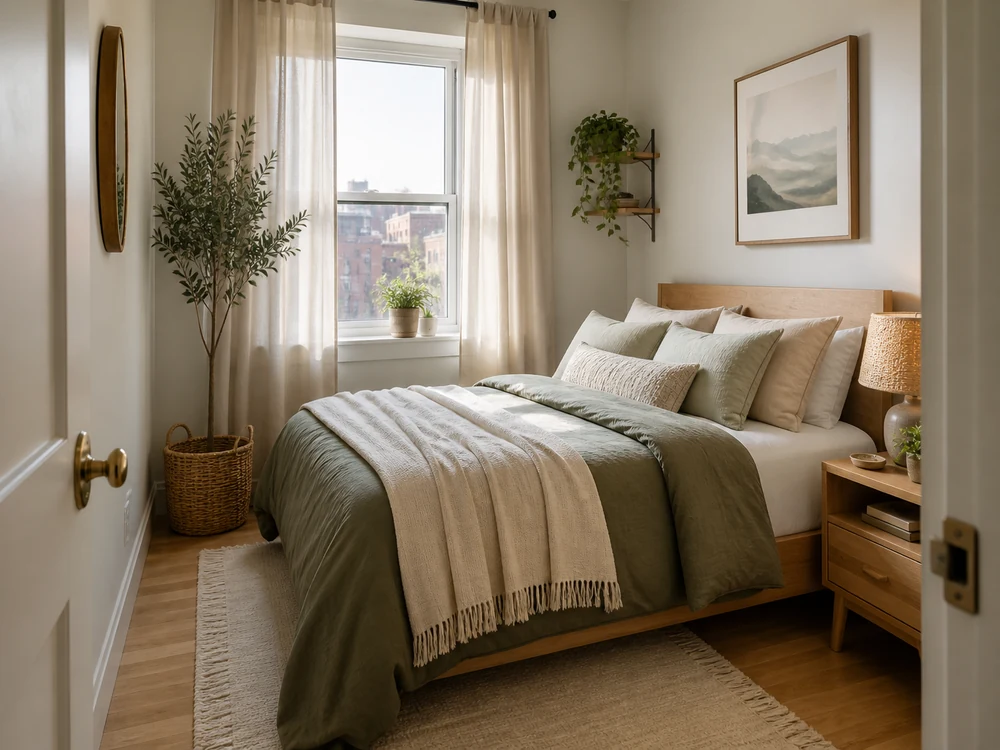
Let Bedding Carry The Main Color Story
Bedding is the largest soft surface in most small bedrooms, so let it carry the color story instead of adding many small accents around the room. A duvet, quilt, throw, and two deliberate pillows can create depth without filling shelves or tabletops.
Keep the palette close enough that the bed reads as one composition. If every pillow introduces a new color, the room starts counting objects. Layer texture before color when the bedroom already feels visually tight.
Use One Large Artwork Instead Of Many Tiny Frames
A single generous artwork can make a small bedroom feel calmer than a scattered group of small frames. Tiny frames create many edges, and edges are what make compact rooms feel busier than they are.
Choose art that sits comfortably above the headboard or opposite the bed. If the wall is narrow, use a tall piece or a pair of slim ledges rather than forcing a crowded gallery arrangement into a tight patch.
Choose Nightstands By Surface Discipline
A nightstand in a small room should hold the nightly routine without becoming a storage tower. A lamp, water glass, book, and tray may be enough. Drawers are useful only when they keep the top clearer, not when they hide abandoned clutter.
Wall-mounted shelves, tiny stools, or narrow tables can work when the bed leaves little side clearance. The test is whether you can change sheets and open the closet without bumping the piece every week.
Make Lamps Do Decorative Work
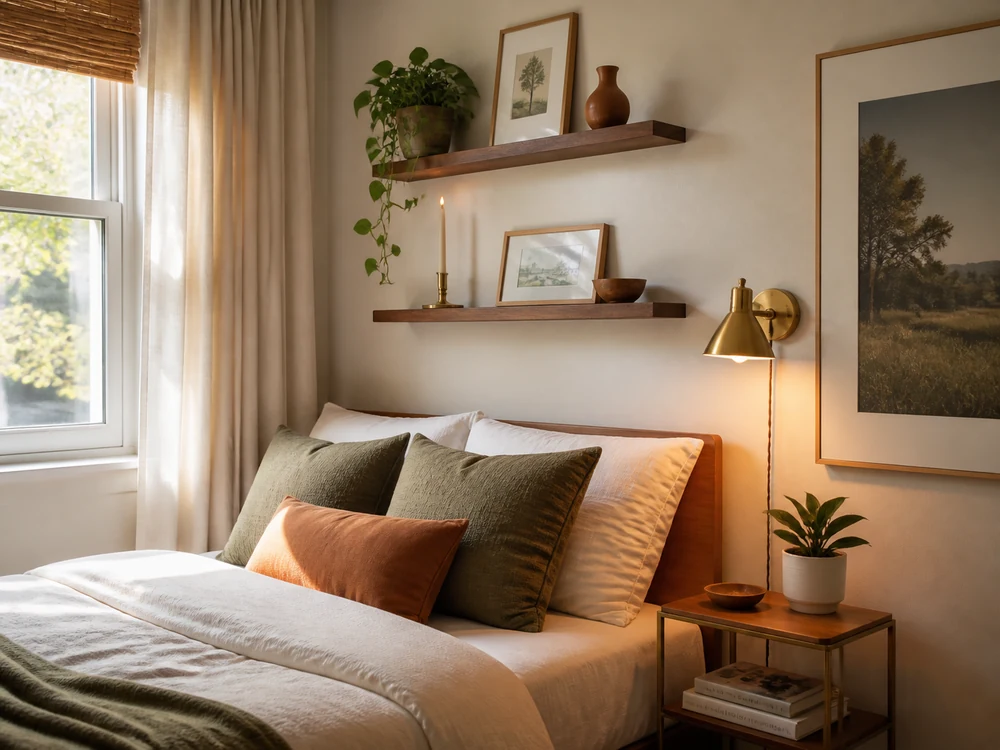
Lighting can decorate without adding clutter. A wall sconce, small shaded lamp, or plug-in pendant adds shape, warmth, and shadow while leaving the tabletop lighter. Review Energy Saver lighting guidance when choosing efficient bulbs that still feel warm enough for a bedroom.
Use one warm light near the bed and let the overhead light become backup. Small rooms feel more polished when the evening light comes from the side rather than flattening every corner from above.
Keep Mirrors Honest About What They Reflect
A mirror can visually open a compact bedroom, but it doubles whatever it faces. Aim it toward a window, a calm wall, or a clean textile surface. Avoid reflecting a crowded closet door, laundry basket, or tangle of cords.
Scale matters here too. A narrow full-length mirror may be more useful than a wide decorative mirror if you need outfit checks and vertical lift without claiming a large wall.
Add Plants Where Maintenance Is Realistic
Plants soften small bedroom decor, yet the best plant is the one you can reach, water, and keep away from bedding. A trailing plant on a high ledge can look elegant, but it becomes annoying if every watering drips onto pillows.
Use one healthy plant instead of several struggling ones. Greenery should make the room feel alive, not add another set of objects waiting for care.
Use A Rug To Frame, Not Swallow
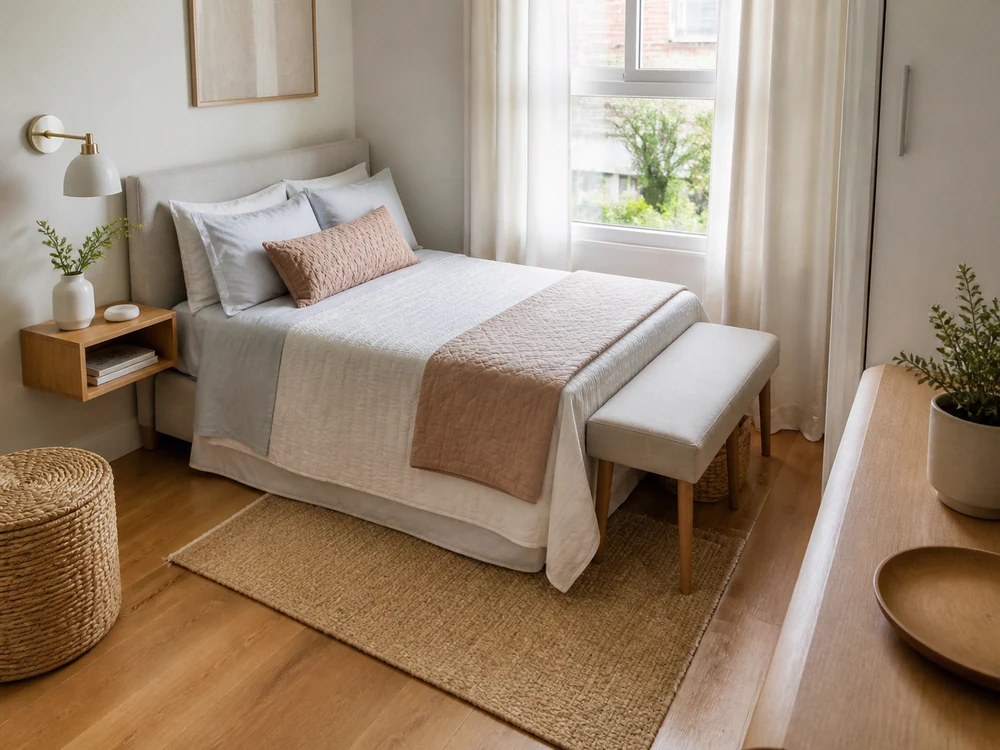
A rug under the bed should frame the sleeping area and give your feet a soft landing. It does not need to cover every visible inch. Leaving a border of floor helps the room feel breathable and makes cleaning easier.
If a full rug is too large or costly, use runners on the sides of the bed. That choice can feel more tailored in a narrow room than a small rug floating awkwardly at the foot.
Let Storage Pieces Look Like Furniture
Baskets, benches, and small dressers can support decor when their materials relate to the room. Woven texture, simple wood, or upholstered fabric reads softer than a stack of exposed plastic containers.
Do not ask a decorative basket to solve every storage problem. Give it one job, such as extra throws or current reading, and move overflow elsewhere before the basket starts looking like a disguised pile.
Keep The Wall Above The Bed Calm
The wall above the bed is tempting because it is visible, but it should not feel heavy over your head. Avoid bulky shelves packed with objects unless they are installed properly and kept light.
If you use tall or heavy furniture near the bed, check the manufacturer’s anchoring hardware and the CPSC Anchor It furniture safety guidance. Safety is part of small bedroom decor because tight rooms put furniture closer to sleeping space.
Make One Corner Intentionally Empty
An empty corner is not a failure to decorate. It gives the eye a resting point and gives the room a place to accept temporary life, such as a suitcase, drying rack, or laundry basket on cleaning day.
Small bedrooms often look more expensive when every corner is not assigned a vignette. Restraint can feel designed when the remaining pieces have stronger scale, better texture, and clearer purpose.
Edit Decor By Morning Behavior
The most honest small bedroom decor test happens in the morning. Notice where clothes land, which surface collects objects, whether the rug bunches, and whether you avoid a side of the bed.
Adjust the decor around those behaviors. Move the tray, reduce pillows, shift the lamp, lower the hook, or remove the bench. A compact bedroom improves when it listens to daily evidence rather than preserving a styled setup.
Use Door Hardware As A Quiet Style Cue
In a tiny bedroom, even hardware becomes part of the decor because there are fewer surfaces to absorb visual noise. A simple knob, clean curtain rod, or matching lamp metal can make the room feel more intentional without adding another object.
Do not over-coordinate every finish. Let hardware repeat once or twice, then stop. Small rooms benefit from recognition, not a matching set that calls attention to every hinge, rod, and handle.
Let Practical Textiles Look Chosen
A laundry hamper, extra blanket, blackout curtain, and rug are practical pieces, but they still shape the room’s style. Choose textures that belong together so necessary items do not look like visual accidents.
This is where small bedroom decor becomes efficient. When useful textiles carry the softness, you need fewer decorative objects on shelves, and the room stays easier to dust and reset.
Decision Guide
| Problem | Better Move | Watch Point |
|---|---|---|
| Room feels busy | Reduce small frames and repeat fewer colors | Let bedding carry the palette |
| Nightstand overflows | Use a tray and smaller lamp footprint | Keep only nightly objects there |
| Bed blocks movement | Remove foot clutter or switch to runners | Preserve the walking line |
| Walls feel unfinished | Choose one larger focal point | Avoid crowding the headboard wall |
Related Her Neat Nest Guides
- Small Bedroom Style Ideas
- Small Bedroom Bed Ideas
- Small Bedroom Furniture
- Bedroom Storage Ideas For Small Rooms
Final Takeaway
Small bedroom decor works when it edits the room as much as it beautifies it. Use textiles, light, scale, and a few strong surfaces to make the bedroom feel cared for while leaving the daily route open.
FAQ
How do I decorate a small bedroom without clutter?
Choose fewer, larger visual moves: calm bedding, one artwork, warm lighting, a controlled nightstand, and a rug that leaves floor visible.
What colors work best for small bedroom decor?
Soft warm neutrals, muted greens, pale blues, clay, and light wood usually feel calm. Use strong color in one place rather than everywhere.
Should I use mirrors in a small bedroom?
Yes, if the mirror reflects light or a calm surface. Avoid placing it where it doubles clutter, laundry, or a busy closet view.