
Oversized paper has no sympathy for apartment dimensions. A drawing can be too wide for a bookcase, too delicate to roll, too large for a desk drawer, and too important to slide behind a wardrobe where dust, pressure, and a future move will decide its condition.
Art storage begins by separating working pieces from finished records. Flat support, clean handling, and an index that reduces unnecessary viewing protect more work than an impressive stack of oversized cases. That is the standard these small apartment art portfolio storage ideas need to meet in a lived-in room.
Sound small apartment art portfolio storage ideas start with the work itself: medium, size, surface, condition, attachment method, and value. Flat files, rigid portfolios, supportive dividers, and a clean viewing surface can protect a modest collection without recreating a studio or making preservation claims the materials cannot support.
When a work is valuable, actively deteriorating, unusually fragile, or made from mixed materials, seek advice from a qualified conservator. Charcoal, pastel, watercolor, ink, collage, photographs, prints, and coated papers may require different handling and enclosures; one generic plastic sleeve is not a universal answer.
Give every portfolio and folder a location code that does not require writing on the artwork. A private inventory can record creator, date, dimensions, medium, condition notes, enclosure type, photograph filename, and the exact cabinet or divider position. Keep uncertain materials separate until they can be assessed, especially pressure-sensitive surfaces, fresh paint, friable media, unknown plastics, and work with active mold or pest evidence. Isolation prevents one damaged item from transferring debris, moisture, adhesive, or abrasion to an otherwise stable group.
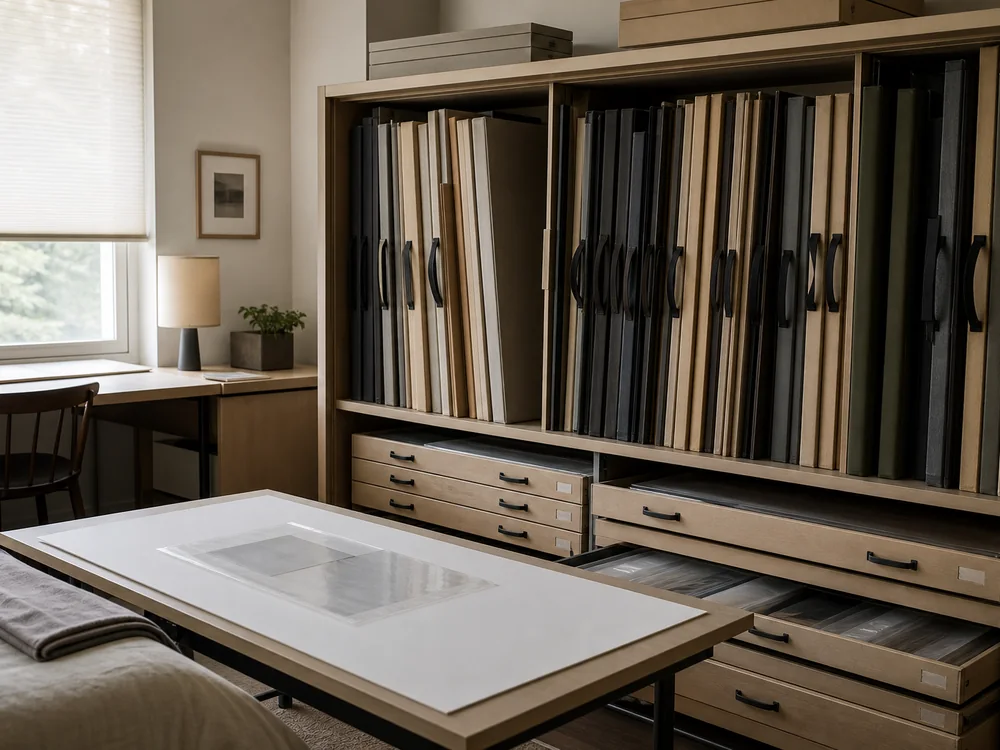
Inventory By Size, Medium, And Condition
Measure the largest work and group pieces by actual dimensions rather than portfolio label. Note friable surfaces, tears, cockling, attachments, pressure-sensitive media, and anything that should not touch another sheet.
Photograph the arrangement and assign a simple location record without marking the art itself. The inventory should help a person retrieve one group without opening every case in the room.
Before finalizing “Inventory By Size, Medium, And Condition,” rehearse the least convenient version of the routine: low light, limited time, or a partially occupied work surface. Then check whether “Small Apartment Art Portfolio Storage Ideas Prefer Full Support” still has a safe route. For art portfolio, resilience in that ordinary moment is more valuable than a perfectly full shelf.
Small Apartment Art Portfolio Storage Ideas Prefer Full Support
Store works flat when their medium and condition require it, using rigid support and appropriate interleaving. Never let oversized paper bridge a shelf gap, hang over a drawer edge, or carry the weight of unrelated objects.
Rigid portfolios can stand vertically only when the contents remain fully supported and broad dividers prevent leaning. A soft zip case alone may bend under its own load.
The apartment tradeoff behind “Small Apartment Art Portfolio Storage Ideas Prefer Full Support” appears when it competes with “Choose Archival Materials Carefully.” Give priority to the condition that is hardest to reverse, then let convenience decide between the remaining options. For art portfolio, that usually means preventing damage or lost context before trying to save a few more inches.
Choose Archival Materials Carefully
Use products described for long-term paper preservation by reputable suppliers and verify whether sleeves, boards, folders, and adhesives suit the specific medium. Avoid strongly scented plastics, pressure-sensitive tape, rubber bands, and unknown contact materials. Do not laminate original work or improvise repairs with household tape.
Isolate loose fragments in appropriate enclosures and seek specialist advice before making an irreversible change. Full support, stable conditions, and careful enclosures give small apartment art portfolio storage ideas their preservation value.
Think of “Choose Archival Materials Carefully” and “Fit A Flat File To The Largest Sheet” as consecutive art portfolio actions rather than separate bins. The art portfolio shelf should support their handoff without a temporary chair, floor, or countertop. For art portfolio, that continuity keeps unfinished work or uncertain condition from disappearing between sessions.
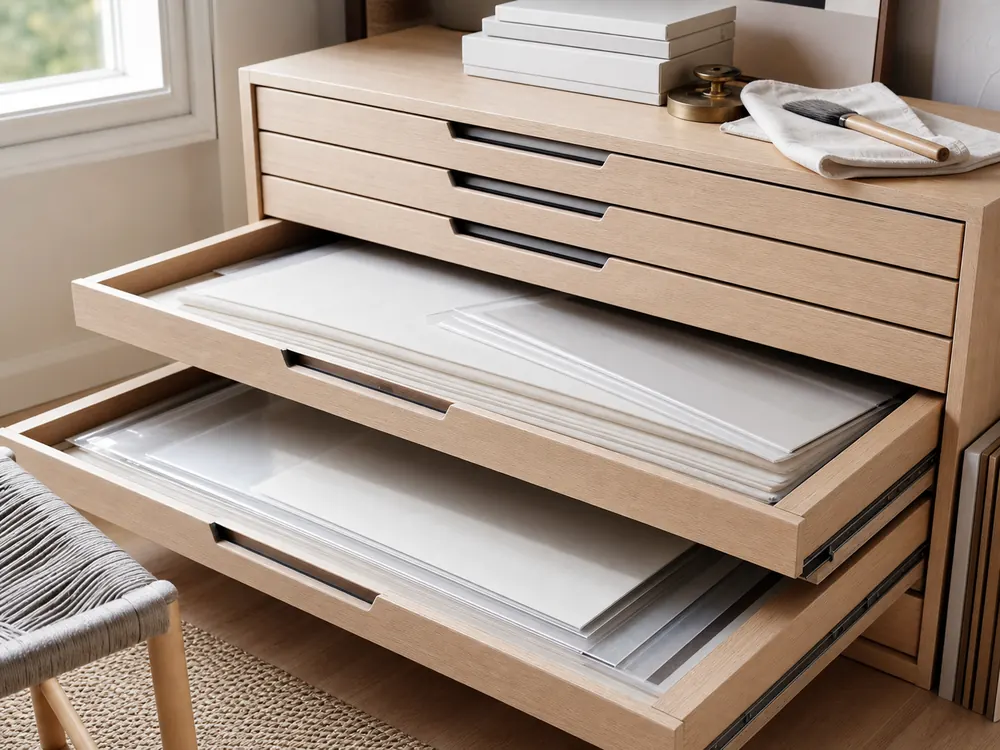
Fit A Flat File To The Largest Sheet
A shallow drawer should support the complete work plus a safe finger margin. Check internal dimensions, drawer load, extension hardware, cabinet stability, and whether another drawer can open without tipping the furniture.
Place heavier portfolios in lower drawers and anchor tall furniture where appropriate. The top can serve as a clean viewing surface only when plants, drinks, lamps, and daily clutter remain elsewhere.
Use Rigid Vertical Cases With Broad Dividers
Stand portfolio cases on a continuous shelf with bases fully supported. Dividers should reach high enough to prevent shoulder pressure and leave enough finger clearance to remove a case without scraping its neighbors.
Keep the row comfortably loose rather than compressed. Small apartment art portfolio storage ideas should make one case accessible without transferring pressure through the entire collection.
Control Light, Heat, Moisture, And Dust
Choose an interior location away from direct sun, radiators, kitchen steam, bathroom humidity, floor-level leaks, and cold exterior walls. Stable household conditions are generally safer than dramatic temperature or moisture swings.
Closed cabinets reduce dust but still need inspection. Watch for odor, sticking sleeves, pests, condensation, and changes in paper shape, especially after seasonal weather shifts.
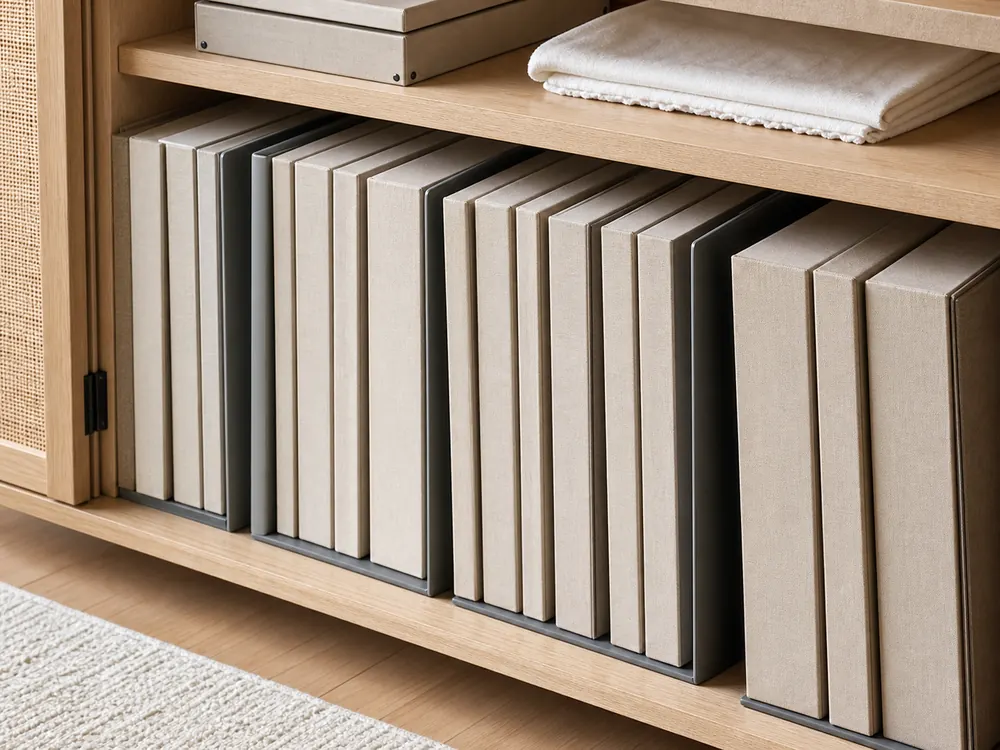
Create A Clean Viewing Surface
Clear a table larger than the portfolio, wash and dry hands, remove food and drinks, and support the work during every move. Use clean handling aids appropriate to the medium and follow specialist guidance when surfaces are fragile. Open one case at a time and preserve the order of folders.
A viewing session should not create a temporary floor archive that remains exposed for days. A clean viewing route keeps small apartment art portfolio storage ideas accessible without increasing handling risk.
Separate Active Work From The Archive
Current drawings need a project tray or rigid working portfolio near the desk; finished work belongs in the slower archive. Keeping these states separate prevents wet media, eraser debris, tools, and repeated handling from reaching completed pieces.
Set a transfer point after the work is dry, documented, and ready for the correct enclosure. The archive should not become a place where unfinished decisions disappear.
Do Not Roll Work By Default
Rolling may be unsuitable for brittle, thick, layered, cracked, mounted, or pressure-sensitive work. If a piece was designed and confirmed to tolerate rolling, use an appropriate core and protective method rather than a tight improvised tube.
Flattening a long-rolled work can also cause damage. Seek conservation guidance when the material resists opening or shows cracking, flaking, or permanent curl.
Prepare Portfolios For A Move
Keep works inside their supportive enclosures, add corner and impact protection around the cases, and pack portfolios vertically or flat according to their construction. Never use them as a surface for furniture, boxes, or straps.
Carry manageable loads, control the route, and unpack into a stable interior location soon after arrival. Document condition before and after the move so new damage is noticed rather than stored.
Before Buying Organizers For Art Portfolio
Product research for art portfolio should begin after the shelf and route are measured. Use “Inventory By Size, Medium, And Condition” as the non-negotiable requirement and treat every additional compartment as optional.
Treat these small apartment art portfolio storage ideas product searches as comparison notes; verify current claims, sizes, and maker requirements for the exact item being considered.
- Acid free art portfolio case
- Archival polyester sleeves
- Shallow flat file cabinet
- Rigid art storage folders
Evidence Supporting Small Apartment Art Portfolio Storage Ideas
Sources for art portfolio cover its safety and material care. The related Her Neat Nest guides connect this art portfolio plan with nearby apartment zones.
- Library of Congress care, handling, and storage of works on paper
- Small Apartment Photo Album Storage Ideas
- Small Apartment Paper Clutter Organization
- Small Apartment Hobby Storage Ideas
Art Portfolio: Practical Questions
Should art portfolios be stored flat or upright?
Fragile or unsupported work often needs flat storage; rigid portfolio cases may stand upright when their bases are fully supported and broad dividers prevent leaning.
Can drawings be stored in plastic sleeves?
Only use sleeves known to be appropriate for the specific medium and preservation purpose; friable, sticky, or textured surfaces may require specialist guidance.
Is it safe to store art under a bed?
Only in rigid, clean, dry, fully supported enclosures raised from floor risks and away from pipes, exterior-wall moisture, pests, crushing, and frequent impact.
Use “Inventory By Size, Medium, And Condition” to set up the art portfolio system; let “Prepare Portfolios For A Move” judge the return. Every art portfolio group should finish its task without borrowing a chair or a neighboring shelf. When the collection or route changes, revisit art portfolio and correct the smallest failing boundary before adding another container.