
small apartment paper clutter organization should make a compact home easier to use, not just more decorated. The smartest setup begins with the friction that shows up on an ordinary weekday: a blocked door, a damp towel, a crowded shelf, a pan with nowhere safe to land, or a surface that collects everything because no better home exists.
This guide treats the room as it is actually lived in. Each idea is designed for renters, studio dwellers, and small-space homeowners who need storage that can be measured, cleaned, moved, and maintained without turning the apartment into a showroom project.
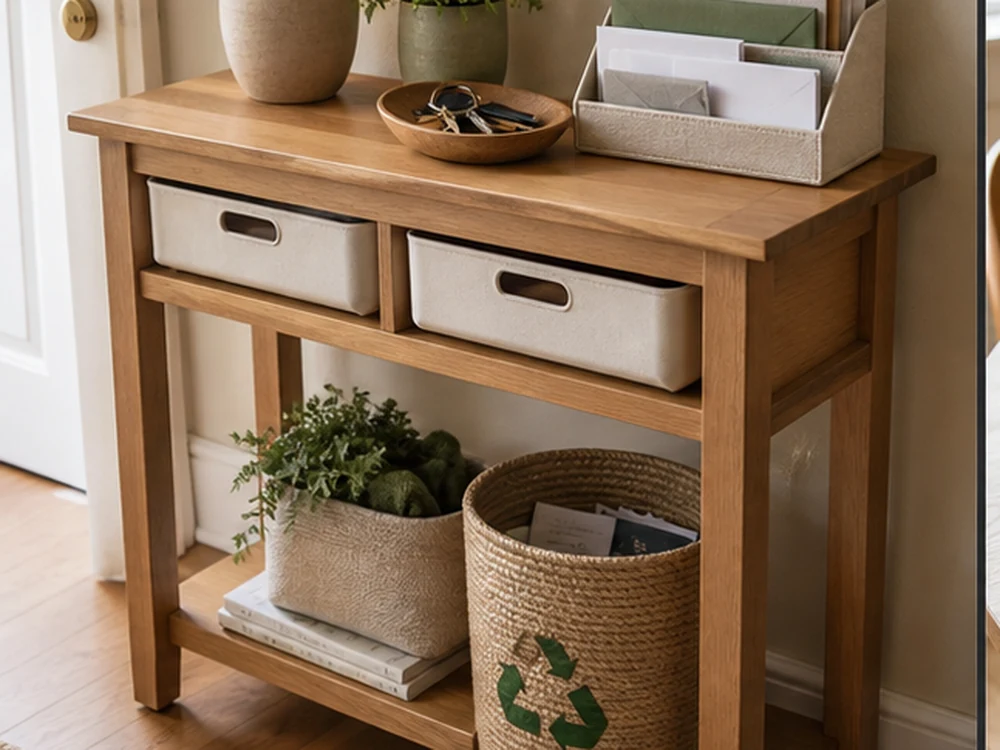
Small Apartment Paper Clutter Organization That Protects Surfaces
Small apartment paper clutter organization is really surface protection. When paper loses its path, it claims the entry console, dining table, nightstand, and desk because each surface looks temporarily available.
A good system gives paper a decision before it becomes scenery. The first choice should be simple: recycle, act, file, or shred. Anything more complicated will be avoided on busy nights.
Keep archives boring and active papers visible. Old records can live in a lidded file box, but current forms need a slimmer, easier-to-see folder that does not disappear under unrelated paperwork.
Small apartment paper clutter organization also needs a table reset. If the dining surface is used for forms or bills, the entire paper kit should lift away in one motion before dinner.
The goal is not a perfect office in miniature. It is a paper loop that keeps documents moving without letting them become a permanent layer on every useful flat surface.
Decide which papers deserve to stay physical. Warranties, signed documents, tax records, and current forms may need a file, while menus, expired coupons, and old envelopes usually need a faster exit.
A small shred pile should be treated like trash, not storage. Once sensitive paper is identified, keep it in one closed envelope or pouch until it can be shredded, then empty that pouch regularly.
Use drawer depth carefully. A deep drawer can hide paper so well that deadlines disappear, while a shallow divider keeps active categories visible enough to encourage action.
If the apartment has no desk, let the paper system travel. A handled caddy or slim folder can work at the dining table, then disappear to a shelf before the surface returns to meals.
Keep one pen, one opener, and one recycling path nearby so every envelope can be handled without creating a second pile.
Receipts need a different rule from long-term documents. Keep return receipts near the entry or shopping bag area, but move tax, medical, and lease papers to a more protected file.
A scanner app can reduce paper, but it should not become another backlog. Scan only documents you will actually need digitally, then give the original a clear keep-or-shred decision.
If several people share the apartment, use one folder per person for active papers. That prevents school forms, work mail, and household bills from becoming one anonymous stack.
A reliable test for small apartment paper clutter organization is whether the system still works on a rushed evening. The strongest small apartment paper clutter organization leave enough space for real habits, quick returns, and one simple reset.
Create A Mail Decision Point At The Door
Paper clutter starts when mail travels too far without a decision. Put a sorter, recycle basket, and one active folder near the door so envelopes are opened, tossed, or parked before they reach the table.
Small apartment paper clutter organization needs an early filter because every later surface is usually shared. A tiny entry system can protect the dining table, sofa arm, and desk all at once.
Keep Active Papers Portable
Bills, forms, and school papers often need action in different places. Use a slim portable folder or handled caddy that can move from entry to table to desk without becoming a loose stack.
The portable system should hold current papers only. If it becomes an archive, it will be too heavy and too vague to use during a normal evening.
Give Receipts A Short-Term Tray
Receipts do not need a permanent home the moment they enter the apartment. Give them one shallow tray or envelope for returns, reimbursements, and warranty checks, then empty it on a schedule.
Keep the tray small on purpose. When it fills, the system is telling you to process, photograph, shred, or recycle instead of buying a larger container.
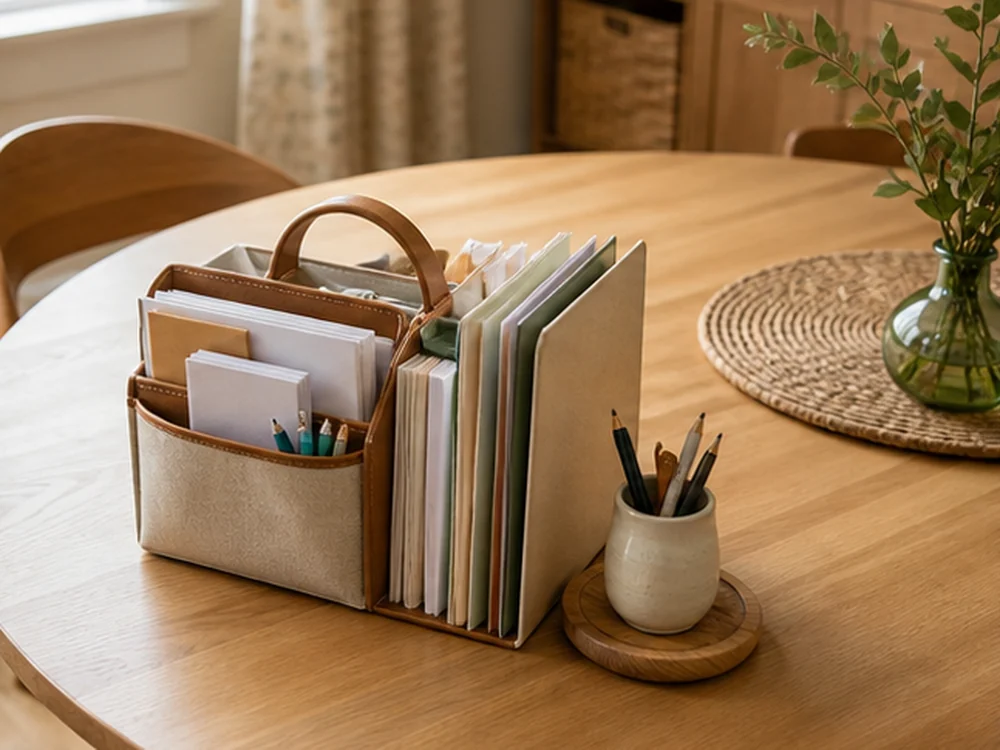
Protect The Dining Table From Paper Creep
A dining table in a small apartment often doubles as a desk, sorting surface, and meal spot. Store papers in a caddy that can be lifted away in one motion before dinner.
Do not leave folders spread out as a reminder. The reminder becomes visual noise, and the table stops feeling available for the life it is supposed to support.
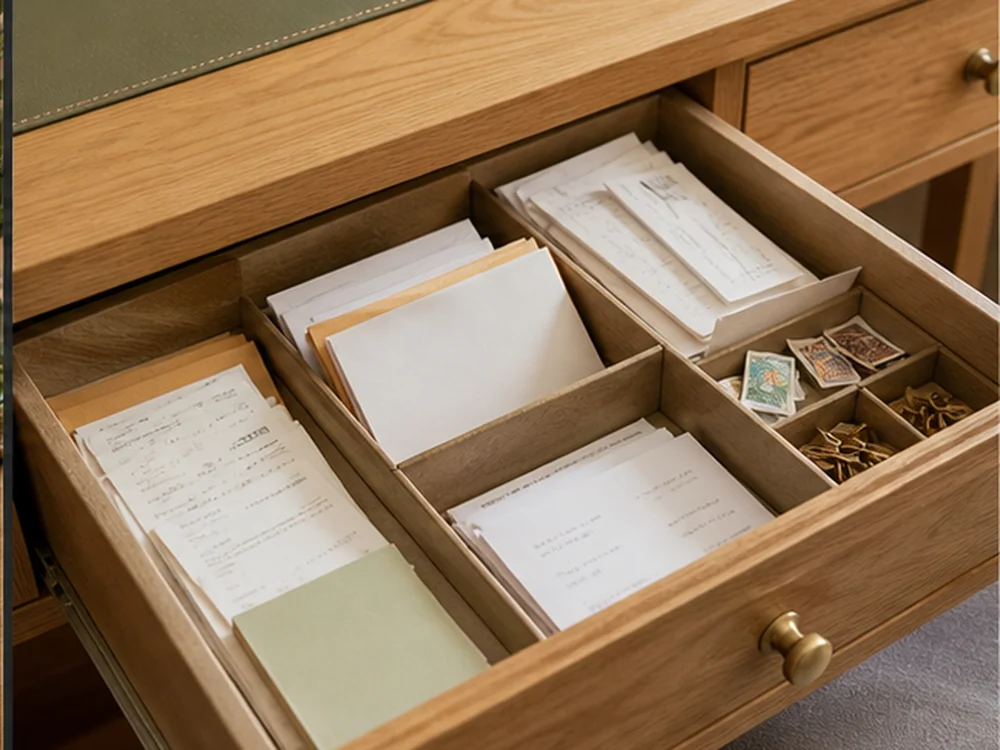
Use One Drawer For Documents In Motion
A shallow drawer can hold stamps, envelopes, checks, receipts, and current forms if each category has a small divider. Keep deep archives somewhere else so the drawer remains easy to open.
Small apartment paper clutter organization works when the active drawer is fast. If you have to search through years of records to find a return label, the drawer is doing too much.
Separate Archive From Action
Archive papers are kept for reference; action papers need a decision. Mixing them makes both categories stressful because old tax forms and tomorrow's permission slip start looking equally urgent.
Use a lidded file box for archive papers and a visible folder for action papers. The physical difference helps your brain understand what needs attention now.
Add A Shred Or Privacy Step
Sensitive papers should not sit in an open basket forever. Keep a small privacy envelope, shred bag, or shredding routine for anything with account numbers, medical details, or personal information.
This does not need to be dramatic. The key is that private papers have a safer path than the general paper pile.
Make Paper Categories Match Real Life
Categories such as urgent, waiting, file, and recycle often work better than beautiful labels. They describe what the paper needs from you, which is more useful than naming where it came from.
If a category stays empty for months, remove it. Small apartments benefit from fewer choices that get used consistently.
Limit Sentimental Paper Before It Spreads
Cards, children's drawings, invitations, and notes need a boundary too. Use one memory folder or flat box, then choose favorites when it fills.
A small home can hold sentimental paper, but not every sentimental paper. The container gives the category dignity without letting it take over daily surfaces.
Reset Paper On A Weekly Trigger
Tie the reset to a habit that already exists: trash night, bill pay, Sunday coffee, or the day groceries arrive. Empty the sorter, clear the receipt tray, and move archive papers out of the active zone.
The best small apartment paper clutter organization is not a perfect filing system. It is a short loop that prevents paper from becoming furniture.
What To Buy Carefully
Product categories can support small apartment paper clutter organization, but only after the measurements and daily habits are clear. Check depth, height, door clearance, cleaning tolerance, material, weight limit, and whether the item solves one specific problem in the room.
If affiliate links are added later, they should point to product categories that match the job rather than fabricated claims about price, ratings, or availability.
Helpful Sources And Related Guides
- FTC guidance on shredding sensitive documents
- Small Apartment Entryway Organization Ideas
- Small Apartment Dining Table Storage Ideas
- Small Apartment Side Table Storage Ideas
FAQ
How do you organize paper clutter in a small apartment?
Create a mail decision point, keep active papers portable, separate archive from action, and reset paper on a weekly trigger.
Where should mail go in a small apartment?
Mail should land near the door in a sorter with recycle and action options, not on the dining table or sofa.
How long should receipts stay in a small apartment?
Keep only receipts needed for returns, warranties, reimbursements, or records, then process or discard them on a regular schedule.
The best small apartment paper clutter organization are usually the choices that make the next normal reset easier. When the room can be used, cleaned, and restored without negotiation, the storage is doing real work.