
small apartment laundry room cabinet organization should make a compact home easier to use, not just more decorated. The smartest setup begins with the friction that shows up on an ordinary weekday: a blocked door, a damp towel, a crowded shelf, a pan with nowhere safe to land, or a surface that collects everything because no better home exists.
This guide treats the room as it is actually lived in. Each idea is designed for renters, studio dwellers, and small-space homeowners who need storage that can be measured, cleaned, moved, and maintained without turning the apartment into a showroom project.
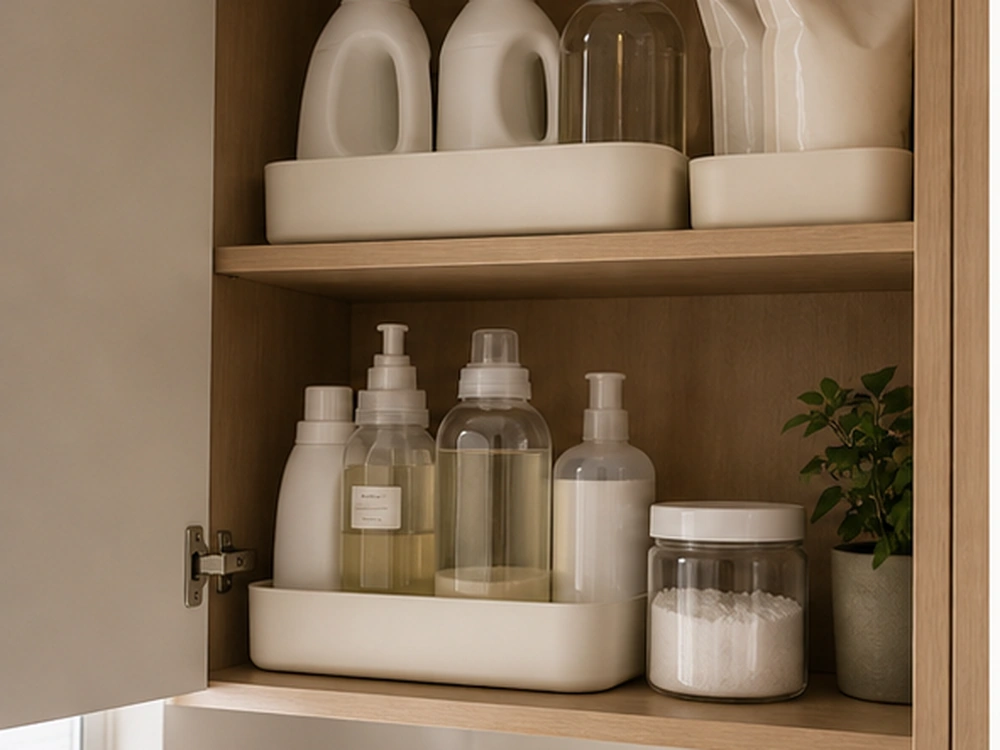
Put Detergent On A Tray First
Detergent bottles drip, even when the cap looks closed. A shallow wipeable tray protects the cabinet shelf from sticky rings and makes it easier to pull the active bottle forward.
Small apartment laundry room cabinet organization should start with leak control because the cabinet is often high or hard to wipe. Preventing residue is easier than cleaning around bottles later.
Keep The Active Product At The Front
The product used every week belongs at the front edge, not behind refills and specialty cleaners. Place the active detergent, stain spray, and dryer product where one hand can reach them.
Backstock can sit behind or above only if the active product is still easy to grab. A cabinet that requires unloading is a cabinet people stop using neatly.
Use A Lower Bin For Stain Tools
Stain bars, small brushes, oxygen powder, and spray bottles need a separate bin because they are used before or during laundry, not at every load. Keep the bin low enough to remove safely.
Line the bin if any product can leak. Stain tools often touch damp fabric, so the container should be washable rather than decorative cardboard.
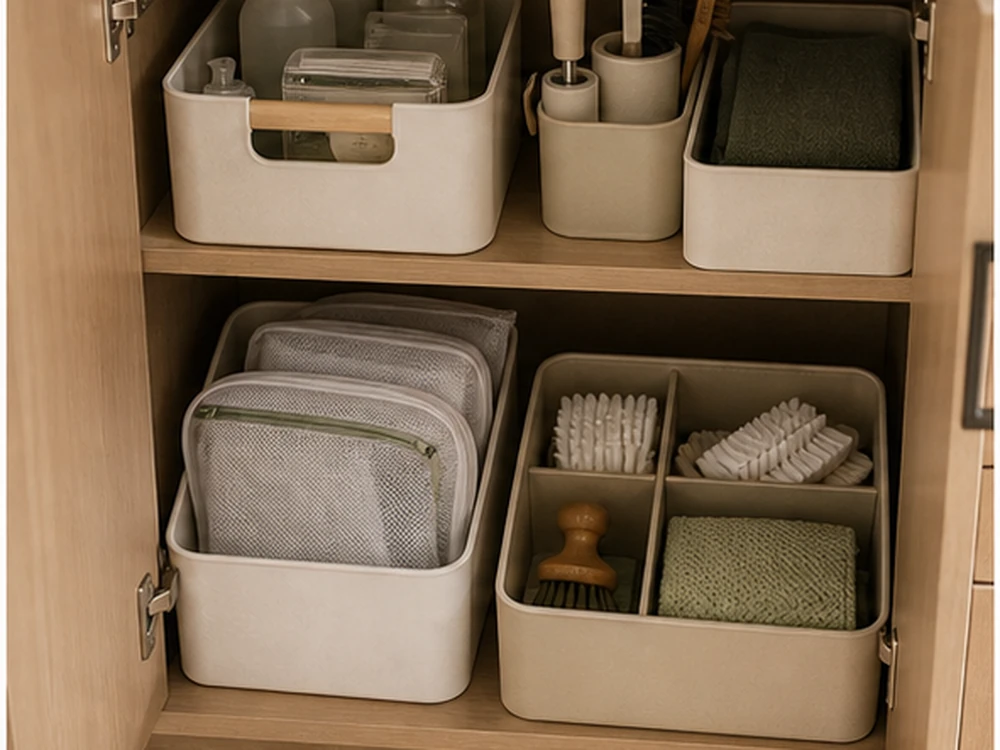
Store Mesh Bags Standing Up
Mesh bags are easy to lose when folded under bottles. Stand them upright in a narrow bin or clip them together with a small ring so they can be grabbed before delicate laundry starts.
Keep lingerie bags, sweater bags, and small sock bags together but not tangled. The point is to protect clothes before they enter the machine, not after the load has already started.
Separate Dryer Products From Liquids
Dryer sheets, wool balls, and scent-free fabric helpers should not sit directly beside liquid detergent. Give dry products a breathable basket or closed box away from bottle drips.
This also keeps fragrance from taking over the cabinet. A compact laundry zone should smell clean, not heavily scented every time the door opens.
Keep Laundry Packets Secure
Laundry packets need secure storage, especially in apartments where children, pets, or guests may access the cabinet. Keep them in the original container or a lidded bin that closes every time.
Do not decant packets into clear candy-like jars. Safety and clarity matter more than a styled shelf in small apartment laundry room cabinet organization.
Limit Refills To The Shelf Capacity
Bulk refills can save money but steal cabinet function quickly. Set a maximum: one open bottle and one backup, or one refill pouch per product type.
If the cabinet bows, crowds, or requires stacking heavy liquid above shoulder height, the value pack belongs somewhere else or should not be bought yet.
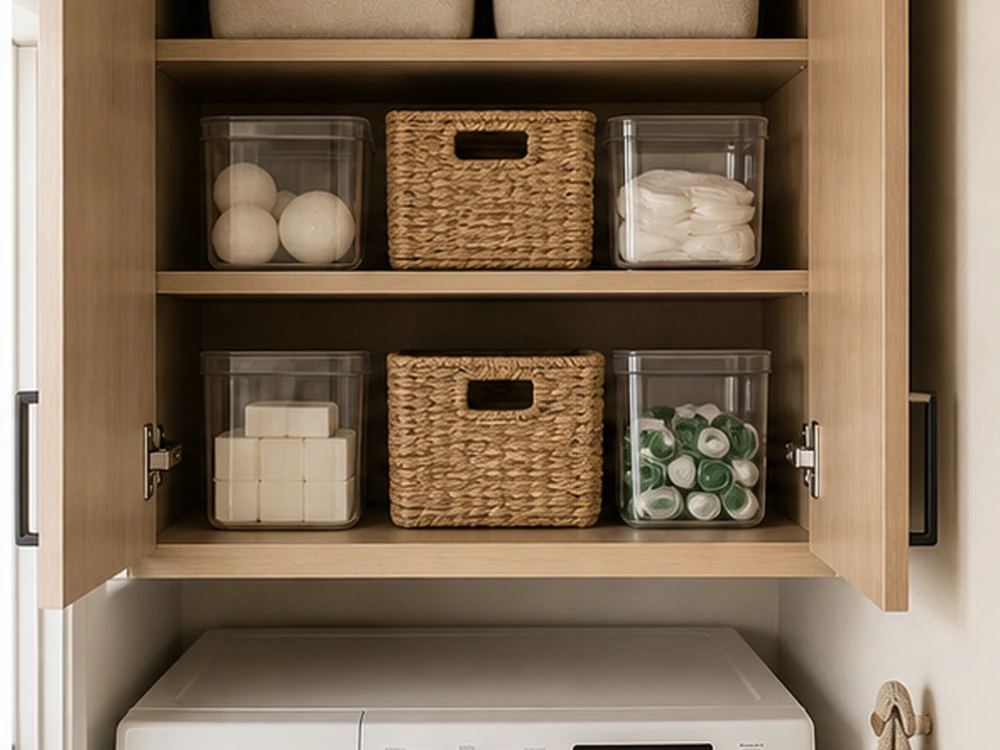
Give Cleaning Cloths Their Own Stack
Laundry cabinets often collect microfiber cloths, stain rags, and spare towels. Fold them into one bin or stack so they do not absorb detergent residue from nearby bottles.
Use a different color or texture for cleaning cloth storage than for clothing-care products. The distinction prevents face cloths and cleaning rags from feeling interchangeable.
Use Door Space Only If It Clears Bottles
A cabinet-door rack can hold lint rollers, small brushes, or dryer sheets if it clears the shelves when closed. Test with temporary tape before mounting anything permanent.
Door storage should be light and shallow. Heavy bottles on a swinging door make the cabinet harder to use and can strain hinges in a rental.
Reset When A Bottle Is Replaced
The best audit happens when a bottle runs out. Wipe the tray, move the backup forward, check for leaks, and add the next item to the shopping list only after the shelf is clean.
That simple replacement habit keeps small apartment laundry room cabinet organization from turning into a row of half-used products and forgotten refills.
Match Cabinet Height To Bottle Weight
Laundry cabinets are often installed high over machines, which makes heavy bottles harder to control. Store large liquid detergent and refill jugs on the lowest reachable shelf or in a lower cabinet whenever possible.
If the only cabinet is high, choose smaller active bottles and keep bulk refills somewhere safer. Small apartment laundry room cabinet organization should not require lifting a slippery jug above shoulder height.
Create A Fabric-Care Zone
Fabric shavers, sweater combs, mesh bags, stain cards, and small repair tools deserve one contained zone. These pieces are too small to float loose beside detergent and too useful to hide in a bedroom drawer.
A shallow bin works better than a deep basket because every tool stays visible. When delicate-care items are easy to grab, they get used before clothing is damaged in the wash.
Keep Cabinet Doors Easy To Close
Laundry cabinets often become overfilled because the door hides the problem. Close the cabinet after placing every organizer; if bottles press into the door or bins catch the hinge, the shelf is already too crowded.
A cabinet that closes cleanly feels calmer and protects supplies from dust. It also keeps the laundry area from looking like open utility storage in the middle of a small apartment.
Run The Cabinet During A Real Load
Start one load and track every supply you touch: detergent, stain tool, mesh bag, dryer sheet, lint brush, and cleaning cloth. Anything used in the same load should be reachable without unloading the cabinet.
This practical test keeps the cabinet organized around laundry motion rather than shelf styling. The best arrangement is the one that still works when the machine is running and hands are damp.
Separate Stocking Up From Doing Laundry
The cabinet should not hold every sale purchase just because the bottles fit. Keep the active routine in the laundry room cabinet and move overflow to a safer lower shelf, utility bin, or clearly marked backstock zone.
This distinction keeps small apartment laundry room cabinet organization from becoming top-heavy and crowded. Laundry day needs quick reach; shopping inventory only needs to be findable before the next bottle runs out.
If the cabinet is above a washer, avoid stacking refill pouches behind tall bottles where they can slump, leak, or hide. Flat pouches are often better in a low bin than balanced on a high shelf.
Keep one small empty space in the cabinet for the item currently in your hand. Without that landing space, caps, scoops, and stain tools end up on top of the washer where vibration can move them.
That small gap is not wasted storage. It is what lets the cabinet function during laundry instead of only looking tidy when closed.
What To Buy Carefully
Product categories can support small apartment laundry room cabinet organization, but only after the measurements and daily habits are clear. Check depth, height, door clearance, cleaning tolerance, material, weight limit, and whether the item solves one specific problem in the room.
If affiliate links are added later, they should point to product categories that match the job rather than fabricated claims about price, ratings, or availability.
Helpful Sources And Related Guides
- American Cleaning Institute laundry packet safety
- Small Apartment Laundry Storage Ideas
- Small Apartment Laundry Detergent Storage
- Small Apartment Cleaning Rag Storage
FAQ
How do you organize laundry room cabinets in a small apartment?
Use trays for liquids, bins for stain tools, secure storage for packets, and separate dry products from detergent bottles.
What should go in a laundry cabinet?
Active detergent, stain supplies, mesh bags, dryer products, cleaning cloths, and limited refills can go in a laundry cabinet.
How do you stop laundry cabinets from getting sticky?
Use wipeable trays under bottles, keep caps clean, store refills upright, and wipe the tray whenever a bottle is replaced.
The best small apartment laundry room cabinet organization are usually the choices that make the next normal reset easier. When the room can be used, cleaned, and restored without negotiation, the storage is doing real work.